
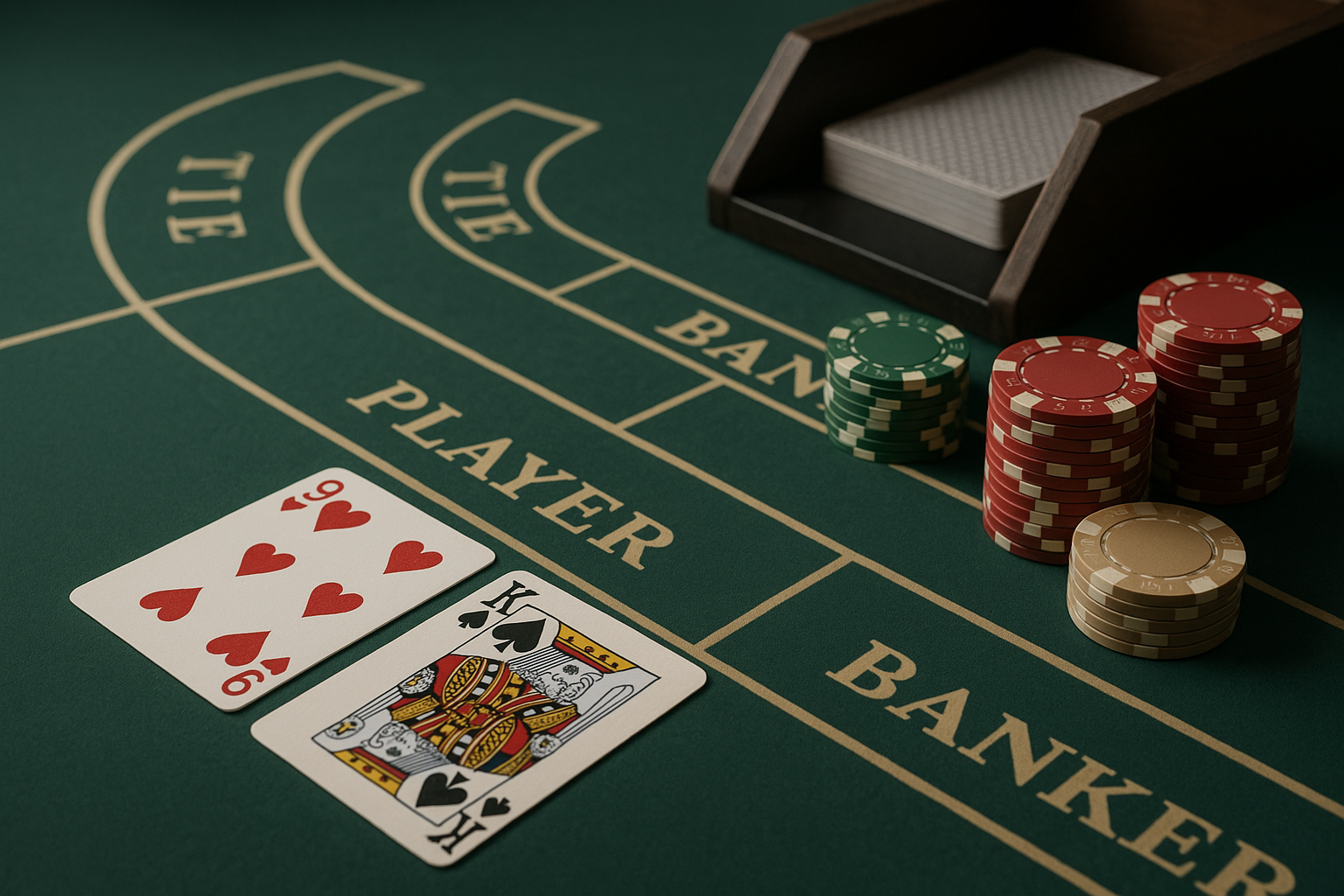
Baccarat accounts for 88% of Macau’s casino revenue despite being one of the simplest games on the floor. No complex strategy. No player decisions beyond the initial wager. Just two hands dealt according to fixed rules, with the lowest house edge in the casino. So why do billionaires and whales choose this game over poker, blackjack, or roulette? The answer lies in a 500-year journey from Italian nobility through French aristocracy to modern VIP rooms—and in the mathematical and psychological forces that make baccarat the ultimate high-roller game. This is the story of how simplicity, favorable odds, and centuries of elite association transformed a card game into the world’s most lucrative gambling product.
From Italian Nobility to French Salons: Baccarat’s Aristocratic Origins
The Italian Birth of ‘Zero’
The game emerged in 15th-century Italy with a name that told players everything they needed to know about its scoring system: baccara, Italian for zero. Face cards and tens counted for nothing—a mathematical quirk that would later prove crucial to the game’s appeal among calculating aristocrats. Unlike dice games where chance ruled absolutely, baccarat offered transparent probabilities wrapped in an aura of sophistication. Italian nobles played early versions in private gaming rooms, where the simplicity of the rules masked the psychological complexity of betting strategies.
French Aristocracy and Chemin de Fer
When baccarat crossed the Alps into France during the 19th century, it found its spiritual home. French nobility didn’t just adopt the game—they transformed it into a cultural institution. The variant called Chemin de Fer (“railway” in French, named for the way the banker role passed around the table like a train moving through stations) became the preferred pastime in Parisian salons and exclusive clubs.
King Louis Philippe reportedly banned public gambling but couldn’t resist the game in private settings. By the 1850s, Chemin de Fer tables in Monte Carlo and French resort towns became synonymous with wealth and social standing. The game required substantial bankrolls—not because the house edge was punishing, but because aristocratic culture demanded high stakes to maintain exclusivity. A minimum bet of 20 gold francs might equal a craftsman’s monthly wages, creating a natural velvet rope that required no enforcement. This deliberate inaccessibility wasn’t a bug in baccarat’s social design—it was the entire feature, building a mystique that would follow the game across continents and centuries.
The Mathematics of High Stakes: Why the House Edge Matters at $100,000 Per Hand
When a whale bets $100,000 on a single hand of baccarat, they’re guaranteed to lose $1,060 over time through the banker bet’s house edge. Compare that to craps with a 1.41% edge on pass line bets, or Caribbean Stud at 5.22%, and the choice becomes obvious. At stakes where a single night can swing $5 million, every fraction of a percentage point compounds into real money.
Breaking Down the House Edge
The mathematical structure of baccarat creates three betting options with dramatically different casino advantages:
| Bet Type | House Edge | Expected Loss per $100,000 Wagered |
|---|---|---|
| Banker | 1.06% | $1,060 |
| Player | 1.24% | $1,240 |
| Tie | 14.36% | $14,360 |
| Roulette (double zero) | 5.26% | $5,260 |
| Blackjack (basic strategy) | 0.5% | $500 |
| Craps (pass line) | 1.41% | $1,410 |
The banker bet carries a 5% commission on wins, yet still maintains the lowest edge because it wins 50.68% of hands compared to the player’s 49.32%. Those seemingly trivial decimals matter enormously when you’re betting six figures per hand. A high roller wagering $100,000 per hand for 80 hands loses $84,800 on banker bets versus $420,800 on roulette over the same session.
Volume and Velocity in VIP Rooms
Baccarat moves fast. VIP rooms typically deal 60 to 80 hands per hour, with no player decisions beyond the initial wager. This velocity creates massive betting volume. A player wagering $100,000 per hand for just four hours moves $24 million through the casino. At 1.06%, that’s $254,400 in expected losses for the house.
Compare this to blackjack, where optimal play drops the edge to 0.5% but decision-making slows the game to 40-50 hands per hour. The house might only see $10 million in volume over the same period. Baccarat’s combination of reasonable edge and extreme velocity makes it profitable for casinos while remaining attractive to players who understand they’re paying the smallest premium for their action.
From Havana to the Vegas Strip: How Baccarat Conquered America
When Tommy Renzoni brought baccarat from the Capri Casino in Havana to the Sands in Las Vegas in 1958, he wasn’t just importing a card game. He was smuggling in an entire mystique. The Cuban Revolution had shuttered Havana’s glittering casino district, and American operators saw an opportunity to capture both the game and its aura of wealth.
The Sands management made a calculated decision that would define baccarat’s American identity for decades: they refused to democratize it. While blackjack and craps tables hummed with middle-class tourists in Hawaiian shirts, baccarat occupied a roped-off sanctuary with thick carpets, tuxedoed dealers, and minimum bets that started where most players’ bankrolls ended. The Dunes followed suit, installing velvet ropes and requiring jackets for men. This wasn’t accidental elitism—it was engineered scarcity.
The strategy worked almost too well. By the early 1970s, baccarat rooms sat empty for hours, waiting for whales to arrive. Casinos realized they’d created a game so exclusive it was losing money on floor space. The solution was mini-baccarat, introduced in 1978 with lower minimums, a single dealer, and placement on the main casino floor. Same game, same 1.06% house edge on banker bets, but without the velvet ropes.
The bifurcation created two worlds. High-limit baccarat remained a private theater for seven-figure sessions, while mini-baccarat brought $25 bettors into the fold. Today’s numbers reveal the enduring power of that original mystique: baccarat tables represent just 2-3% of Las Vegas table games but generate 20-25% of total table game revenue. Those roped-off rooms still exist at Bellagio and Wynn, where a single player might bet $200,000 per hand. The game Renzoni carried across the Florida Straits had found its American home—not by becoming accessible, but by remaining aspirational.
James Bond, Kerry Packer, and the Cultural Mystique
The 007 Effect
When Ian Fleming sat down to write Casino Royale in 1953, he chose Chemin de Fer as the centerpiece of Bond’s showdown with Le Chiffre. Not poker. Not roulette. The French variant of baccarat, played in hushed rooms where fortunes changed hands on the turn of a single card. Fleming understood something crucial: baccarat signaled sophistication in a way no other casino game could match.
The scene worked because Fleming made the game feel dangerous and exclusive. Bond wasn’t just gambling—he was engaging in psychological warfare at a table where only the wealthy and powerful belonged. When Sean Connery brought Bond to screens in Dr. No (1962), then played baccarat again in Thunderball (1965), the association solidified. Suddenly every aspiring high roller wanted to sit where Bond sat, to experience that particular brand of elegant risk.
The impact lasted decades. Casino operators noticed that mentioning the “James Bond game” drew wealthy players who might otherwise stick to blackjack or craps. The 1.06% house edge on banker bets didn’t hurt, but the cultural cache mattered more. Players weren’t just chasing favorable odds—they were buying into a fantasy of sophistication.
Legendary Wins That Built the Legend
Kerry Packer proved that baccarat’s mystique wasn’t just Hollywood smoke. The Australian media tycoon walked into the MGM Grand in the mid-1990s and proceeded to win somewhere between $20 and $40 million in a single session. The exact figure remains disputed—Packer himself never confirmed—but casino insiders watched the billionaire play eight hands simultaneously at $250,000 per hand.
Stories like Packer’s don’t just create gossip. They create aspiration. Every wealthy player who heard about that win wondered if they possessed the same combination of nerve and luck. The psychology is simple: legendary victories make the game feel beatable, even when the mathematics remain unchanged. Baccarat’s low house edge gives just enough plausibility to transform fantasy into possibility.
The Psychology of Simplicity: Why Billionaires Choose a Game With No Decisions
When Kerry Packer sat down at a Las Vegas baccarat table in the 1990s, he wasn’t there to showcase poker skills or count blackjack cards. The Australian media mogul wanted to bet millions without thinking. Baccarat offered exactly that—a game where the only decision is how much to wager.
This paradox defines baccarat’s appeal to the ultra-wealthy: the richest gamblers choose a game with zero strategic complexity. Unlike poker’s mental warfare or blackjack’s card counting possibilities, baccarat strips gambling to pure chance. You bet on Banker or Player, cards get dealt according to fixed rules, and you either win or lose. No decisions after the initial bet. No way to improve your odds through skill.
For billionaires accustomed to high-pressure business decisions, this simplicity becomes therapeutic. They’re not proving intellectual superiority or defending their ego against dealers who might outplay them. The game’s mechanical nature eliminates performance anxiety entirely.
The pace matters too. Baccarat hands resolve in 40-60 seconds, allowing players to cycle through 80-100 hands per hour without mental fatigue. Compare this to poker tournaments requiring hours of concentration, and the efficiency becomes clear. High rollers can bet $200,000 per hand for three straight hours without needing strategy adjustments or complex calculations.
The cultural and practical infrastructure built around baccarat seals its dominance:
- Private salons separate whales from the casino floor, offering personalized service and discretion
- Table limits ranging from $100 minimums to $500,000 maximums (sometimes higher for known players) accommodate any bankroll
- Ritual and superstition flourish in the absence of strategy—squeezing cards, tracking patterns on scorecards, wearing lucky colors
- Asian market preference drives 88% of Macau’s gaming revenue toward baccarat, where cultural traditions embrace chance-based gambling
The mathematical edge helps too. At 1.06% house advantage on Banker bets, baccarat offers better odds than American roulette (5.26%), Caribbean Stud (5.22%), or slot machines (2-15%). When you’re betting $300,000 per hand, that percentage difference translates to millions in expected losses over time. Whales may not calculate exact probabilities, but they understand baccarat bleeds their bankroll slower than alternatives.
Macau’s Baccarat Empire: Where 88% of Revenue Comes From One Game
The Macau Phenomenon
When Macau overtook Las Vegas as the world’s gambling capital in 2006, one game drove the entire revolution. Baccarat generates 88% of the territory’s casino revenue—a concentration so extreme it defies Western gambling logic. Las Vegas casinos derive roughly 20-25% of their table game revenue from baccarat despite offering dozens of games. Macau built a $33 billion industry on essentially one product.
The mathematics matter, but culture explains everything. In Chinese gambling tradition, baccarat aligns perfectly with concepts of fate and luck that permeate high-stakes gaming. The game’s binary nature—banker versus player—mirrors yin and yang philosophy. Players don’t make complex decisions; they read patterns on scorecards, tracking outcomes in elaborate notation systems that would baffle Western statisticians but feel intuitive to Asian gamblers who see trends where probability theory sees randomness.
The VIP junket system transformed these cultural preferences into industrial scale. Junket operators extend massive credit lines to mainland Chinese whales, circumventing currency controls through complex arrangements. These intermediaries guarantee player debts to casinos, taking commissions of 1.25-1.5% on total betting turnover. A single whale might wager $100,000 per hand across multiple tables simultaneously, generating millions in action during weekend trips. The junket operator profits whether the player wins or loses—they’re paid on volume, not outcomes.
Record-Breaking Wins and Losses
In 2015, an anonymous Chinese businessman won $55 million playing baccarat at an undisclosed Macau casino over a three-day session. The win, while spectacular, barely registered in the casino’s quarterly reports—evidence of the staggering scale of Macau’s baccarat economy. Individual casinos routinely see daily baccarat handle exceeding $500 million.
The losses can be equally spectacular. Kerry Packer, the Australian media mogul, reportedly lost $20 million in a single baccarat session at MGM Grand in Las Vegas during the 1990s. But Macau’s VIP rooms see such swings monthly. The game’s low house edge (1.06% on banker bets) means variance dominates in the short term, creating the dramatic wins and crushing losses that fuel whale psychology.
Phil Ivey, Edge Sorting, and the Limits of Advantage Play
In 2012, poker legend Phil Ivey walked into London’s Crockfords Casino and proceeded to win £7.7 million ($9.6 million) playing punto banco baccarat over two sessions. A year earlier, he’d won $9.6 million at Atlantic City’s Borgata, then returned for another $10 million score. The casinos paid initially, then refused. What followed became the most significant legal battle over advantage play in modern gambling history.
The Phil Ivey Edge Sorting Scandal
Ivey wasn’t counting cards. He was exploiting microscopic imperfections in card manufacturing through a technique called edge sorting. Playing with Cheung Yin “Kelly” Sun, Ivey made seemingly superstitious requests: use a specific brand of purple Gemaco cards, rotate certain cards 180 degrees for “luck,” and have the same cards used across multiple shoes. The dealer complied, viewing these as harmless rituals from a whale betting $150,000 per hand.
The rotations weren’t superstition. They were intelligence gathering. Asymmetrical diamond patterns on card backs, invisible to casual observers, allowed Ivey to identify high-value cards when they appeared. This gave him approximately a 6% edge over the house—a massive advantage in a game where the casino normally enjoys a 1.06% edge on banker bets.
Both Crockfords and Borgata sued. British courts ruled in 2016 that Ivey had engaged in cheating under civil law, despite no card marking or device use. New Jersey courts followed in 2018, ordering Ivey to return the $10.1 million. The precedent was clear: manipulating game conditions, even without deception, crossed legal boundaries.
Why You Can’t Count Cards in Baccarat
Ivey’s edge sorting worked because it bypassed baccarat’s fundamental problem for advantage players: card counting is mathematically worthless. Unlike blackjack, where removing a single ace shifts the house edge by 0.5%, baccarat’s eight-deck shoes and rigid drawing rules make card removal effects negligible.
Stanford mathematician Edward Thorp, who proved blackjack was beatable in 1962, analyzed baccarat extensively. His conclusion: perfect counting yields approximately 0.05% edge—and only on specific counts when betting banker. Compare this to blackjack’s 1-2% edge for skilled counters. To profit from this microscopic advantage, you’d need to spread from table minimum to $100,000+ per hand, a pattern that screams “counter” and gets you barred instantly.
The mathematics explain why high rollers embrace baccarat. No amount of skill meaningfully changes the outcome. A billionaire betting $500,000 per hand faces the same 1.06% house edge as a tourist betting $25. The game remains essentially unbeatable through legal means, which paradoxically makes it the perfect arena for pure high-stakes action.
What High Rollers Know That You Don’t
The casino whale betting $200,000 per hand isn’t trying to outsmart the house. They’re buying time at the table with minimal cost.
Here’s the math that matters: At 100 hands per hour with $100,000 average wagers on banker bets (1.06% house edge), a high roller’s expected loss is $106,000. Brutal on paper. But casinos competing for that action routinely offer 10-20% loss rebates, airfare, luxury suites, and access to private gaming salons. A 15% rebate transforms that $106,000 theoretical loss into $90,100—still expensive, but now the whale is paying roughly $900 per hand for entertainment, prestige, and the dopamine rush of moving serious money.
Regular players misunderstand what drives these decisions. High rollers choose baccarat because:
- The house edge is honest and minimal – No skill differentials or complicated decisions that increase mathematical disadvantage through player error
- Variance works both ways – On short-term sessions, that 1.06% edge means outcomes hover near break-even, creating genuine winning opportunities
- Comps exceed theoretical loss – VIP programs, junket arrangements, and negotiated terms often return 20-40% of action through rebates and amenities
- Social and psychological value – The status of high-stakes play, relationships with casino hosts, and the ritual itself justify costs that would seem irrational to outside observers
- Time efficiency – Fast gameplay delivers maximum action per hour without the mental fatigue of poker or the grinding pace of craps
Baccarat’s lasting appeal isn’t about beating mathematics. It’s about understanding that for players wagering at this level, the 1.06% house edge represents one of the cheapest forms of luxury entertainment available—especially after factoring in everything casinos provide to keep whales swimming in their waters. The game’s transparency, speed, and favorable odds create the optimal vehicle for managing entertainment cost at scale.
Baccarat’s dominance among high rollers isn’t an accident of history or marketing. It’s the inevitable result of mathematical reality meeting psychological need. From 15th-century Italian nobility to Macau’s $33 billion empire, the game survived because it solved a problem: how to offer pure, high-stakes action with minimal house advantage and zero skill requirements. The 1.06% edge on banker bets remains among the lowest in any casino. The rules stay simple enough to learn in five minutes but carry enough prestige to satisfy billionaires. The pace moves fast enough to generate massive volume without demanding mental stamina.
Every element reinforces the others. French aristocrats built the mystique. James Bond cemented the cultural association. Tommy Renzoni brought it to Vegas, where casinos learned that exclusivity sells. Macau proved that one game could power an entire gambling economy when aligned with cultural preferences. Phil Ivey’s legal defeat confirmed what Edward Thorp calculated decades earlier: the game remains essentially unbeatable, which paradoxically makes it perfect for whales who want action without ego risk.
The lesson extends beyond casino floors. Sometimes the simplest choice is the smartest one—especially when millions are on the line. Baccarat endures because it strips away everything except the essential transaction: risk, reward, and the honesty of transparent mathematics. In a world of complex strategies and hidden edges, that clarity is worth paying for.