
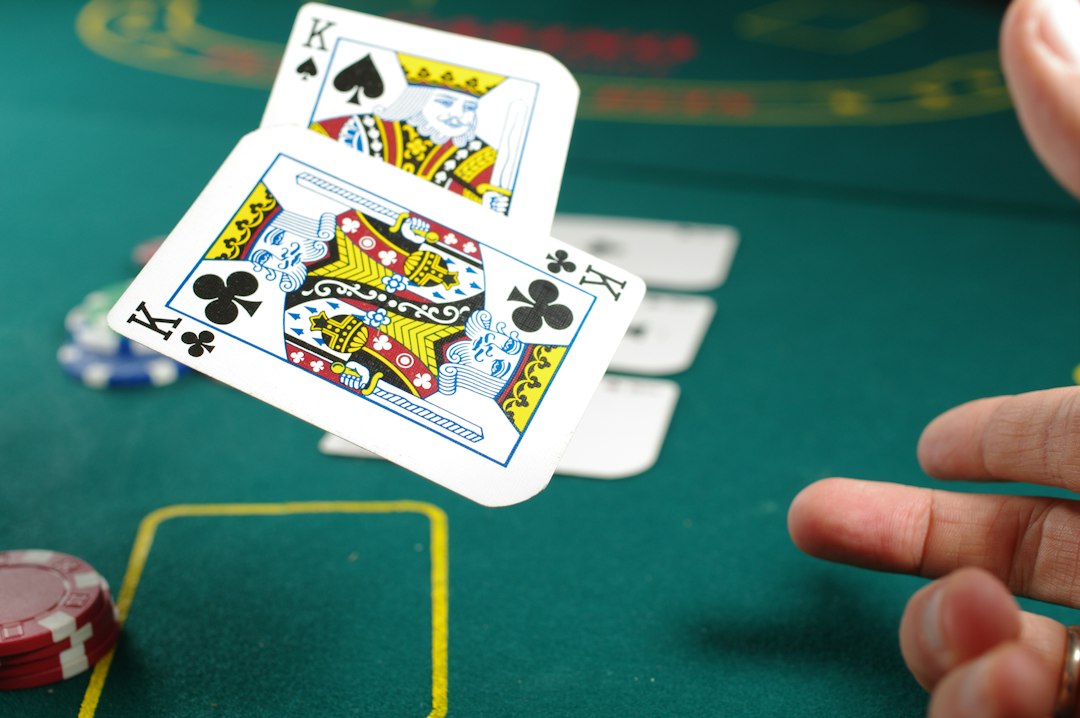
On August 2, 1876, Wild Bill Hickok held two black aces and two black eights when a bullet ended his life in a Deadwood saloon. That hand—the Dead Man’s Hand—captures everything essential about poker: luck, risk, and the razor-thin margin between triumph and disaster. Poker is America’s game, born in New Orleans gambling halls and Mississippi riverboats during the 1830s, evolving from a 20-card cheating scheme into a global phenomenon worth billions. This is the complete timeline of that transformation—from frontier saloons to Las Vegas tournaments, from the online revolution to AI opponents that now beat the world’s best players. Every major turning point, scandal, and mathematical breakthrough that shaped modern poker.
Birth on the Mississippi: Poker’s Origins (1820s-1850s)
New Orleans in the 1820s was a combustible mix of French settlers, Spanish traders, enslaved laborers, and American fortune-seekers—all packed into sweltering gambling halls where a game called “poque” mutated into something distinctly American. The French brought their betting traditions, but Americans stripped away the complexity and added something crucial: the bluff. By 1829, English actor Joe Cowell recorded witnessing a “cheating game” played with a 20-card deck (only aces, kings, queens, jacks, and tens) where four players each received five cards and bet on who held the best hand.
The mathematics were brutally simple. With only 20 cards and four players, you could calculate exactly how many aces or kings remained in the deck. A pair of aces gave you roughly 1-in-4 odds of winning—straightforward enough that even drunk steamboat passengers could grasp the stakes. But the 20-card version couldn’t support the complexity that made poker genuinely strategic.
The Riverboat Era and Professional Gamblers
Around 1834, someone—history doesn’t record exactly who—introduced the full 52-card deck. This single change exploded poker’s mathematical possibilities. Suddenly straights and flushes became viable hands, and the odds of any given holding became harder to calculate mentally. The number of possible five-card combinations jumped from 8,568 to 2,598,960. Professional gamblers loved this opacity.
Riverboats became floating casinos carrying cotton, passengers, and card sharks between New Orleans and St. Louis. These weren’t the romantic vessels of later Hollywood films—they were cramped, dangerous, and stank of tobacco and desperation. Jonathan H. Green’s 1843 book An Exposure of the Arts and Miseries of Gambling explicitly called poker “the cheating game,” detailing how professionals used marked cards, second-dealing, and collusion to fleece merchants and planters carrying cash from crop sales. Green estimated that by the 1840s, more than 1,000 professional gamblers worked the Mississippi, extracting an estimated $1 million annually from victims.
Gold Rush Poker: Following the Money West
When James Marshall discovered gold at Sutter’s Mill in 1848, professional gamblers saw a different kind of gold rush. Within months, card sharps abandoned the Mississippi for California saloons, following miners who carried pouches of gold dust. San Francisco’s population exploded from 1,000 to 25,000 between 1848 and 1849, and nearly every establishment dealt poker.
The economics were irresistible. A miner might spend months extracting $500 in gold, only to lose it in a single night at a Portsmouth Square gambling house. Unlike riverboat games with fixed passenger pools, California offered a constantly refreshing supply of marks fresh from the goldfields. Professional gamblers didn’t need to mine—they simply positioned themselves between the earth and its riches, letting probability do the extraction work.
The Wild West and the Dead Man’s Hand (1860s-1890s)
On August 2, 1876, James Butler “Wild Bill” Hickok sat down for his last poker game at Nuttal & Mann’s Saloon No. 10 in Deadwood, Dakota Territory. The legendary gunfighter and lawman had a superstition about sitting with his back to the door—he’d survived too many enemies to take that risk lightly. But that afternoon, another player refused to give up the safe seat. Minutes later, Jack McCall walked through that door and shot Hickok in the back of the head. When Wild Bill’s cards hit the table, witnesses recorded the hand: two black aces, two black eights, and a disputed fifth card lost to history. The Dead Man’s Hand entered American mythology.
Wild Bill Hickok’s Final Game
The game was five-card draw, the dominant poker variant of the frontier era. Players received five cards, discarded unwanted ones, and drew replacements in a single round of betting strategy. Unlike modern Texas Hold’em with its shared community cards, five-card draw was pure individual combat—you couldn’t see anyone else’s cards, making bluffing both easier and deadlier in every sense. Hickok’s final hand, two pair of aces and eights, would have been strong but not unbeatable. The real odds of being dealt that specific combination? Roughly 1 in 21,128 hands. Death found him holding cards that thousands of players receive and fold every day.
Poker as Frontier Currency
Between 1860 and 1890, poker became the financial engine of saloon culture across mining camps, cattle towns, and railroad outposts. The game served as more than entertainment—it functioned as actual currency in communities where banks didn’t exist and paper money carried little trust. A skilled poker player could parlay a $5 stake into a mining claim, a horse, or passage to the next town. The game’s reputation attracted exactly the type of men who thrived in lawless territory: gunfighters, gamblers, and outlaws who understood that mathematical skill mattered as much as a fast draw. Doc Holliday made more money at poker tables than he ever did practicing dentistry, and Wyatt Earp supplemented his marshal’s salary dealing cards in Tombstone saloons.
Las Vegas and the Birth of Tournament Poker (1970-1990s)
Benny Binion’s Vision: The First WSOP
In 1970, Benny Binion gathered seven of the best poker players in the world at his downtown Las Vegas Horseshoe Casino. Johnny Moss, Amarillo Slim, Puggy Pearson, Doyle Brunson, and three others sat down not for a traditional cash game, but for something entirely new: a tournament with a predetermined structure and a single champion. Binion, a former bootlegger turned casino owner, understood something fundamental about poker’s appeal. Cash games created millionaires in back rooms, but tournaments created legends in public view.
That first World Series of Poker didn’t even use a traditional tournament format. The players voted on who played best after several days of cash games, crowning Johnny Moss as champion. But by 1971, Binion instituted a freeze-out tournament structure with a $5,000 buy-in. The winner took everything, and more importantly, earned the title of World Champion. The buy-in represented serious money—roughly $37,000 in today’s dollars—but it was accessible enough to attract ambitious players willing to risk everything for glory.
Why Texas Hold’em Won
Five-card draw dominated American poker for over a century. Seven-card stud ruled Las Vegas cardrooms through the 1960s. Yet by the mid-1970s, Texas Hold’em had overtaken both as the WSOP’s marquee game and poker’s flagship variant. The reason wasn’t tradition or complexity—it was mathematics and television potential.
Hold’em allowed ten players at a single table using just five community cards, versus stud’s limitation of seven or eight players before running out of cards. This density meant bigger prize pools and more dramatic confrontations. The shared board created multiple decision points: pre-flop, flop, turn, and river. Each street exponentially increased strategic depth while remaining visually comprehensible to spectators. When ESPN began broadcasting the WSOP in the late 1970s, viewers could see exactly what every player saw. The game had transformed from smoky back rooms into legitimate sport, complete with champions, hierarchy, and million-dollar dreams.
The Television Revolution: Hole-Card Cameras Change Everything (1999-2002)
Henry Orenstein survived four Nazi concentration camps, built a fortune in the toy industry with Transformers, and in 1999 solved poker’s fundamental television problem: nobody watching at home could understand what was happening. His hole-card camera patent—a simple lipstick-sized lens embedded in the rail of a poker table—turned an opaque card game into compelling drama by revealing each player’s hidden hand to viewers in real-time.
Before Orenstein’s invention, televised poker was unwatchable. Cameras showed players pushing chips and making faces, but audiences had no idea whether someone was bluffing with seven-high or value-betting the nuts. The strategic tension existed only in players’ minds. Late Night Poker in the United Kingdom became the first show to deploy the technology in 1999, and the shift was immediate. Viewers could now watch Phil Hellmuth fold pocket kings while his opponent held absolute air, creating the narrative tension of a thriller where the audience knows more than the characters.
The World Poker Tour launched in 2003 with hole-card cameras as standard equipment, transforming poker from a niche participant activity into spectator entertainment that pulled 1.1 million weekly viewers. The mathematics suddenly made sense to casual audiences—they could see the 4.5% chance of hitting an inside straight, watch someone chase it anyway, and understand exactly why Mike Sexton was shaking his head in the commentary booth. Poker became a story with visible stakes, calculable odds, and real psychological warfare playing out in high definition.
The Moneymaker Effect: How $39 Became $2.5 Million (2003)
On May 23, 2003, a 27-year-old accountant from Tennessee named Chris Moneymaker sat at the final table of the World Series of Poker Main Event with zero live tournament experience. Ten days earlier, he’d won his seat through a $39 online satellite tournament on PokerStars. When he beat professional player Sam Farha heads-up to claim the $2.5 million first prize, he didn’t just win a poker tournament. He ignited a cultural phenomenon that would fundamentally reshape the game.
The $39 Satellite That Changed Poker
Moneymaker’s path to poker immortality began with a simple mathematical proposition: turn $39 into a $10,000 WSOP Main Event entry. He won his way through PokerStars’ multi-tier satellite system, never intending to actually play in Las Vegas. His father convinced him to go. The symbolism of his surname—his actual birth name, not a pseudonym—became marketing gold. Here was proof that anyone with an internet connection and pocket change could compete against poker’s elite.
The television broadcast on ESPN featured hole card cameras that let viewers see each player’s cards in real time. Millions watched an amateur bluff a seasoned pro with a stone-cold read. The message resonated: skill matters, but regular people could learn and compete.
Boom Years: 2003-2006 Growth Explosion
The numbers tell the story of poker’s explosive growth:
| Year | WSOP Main Event Entries | First Prize | Online Qualifier Winners |
|---|---|---|---|
| 2003 | 839 | $2.5 million | 1 (Moneymaker) |
| 2004 | 2,576 | $5 million | Greg Raymer |
| 2005 | 5,619 | $7.5 million | 1,100+ qualifiers |
| 2006 | 8,773 | $12 million | 1,600+ qualifiers |
PokerStars experienced 1,000% growth in registered accounts between 2003 and 2005. Online poker sites multiplied overnight. College dorms became incubators for professional players grinding micro-stakes tournaments. The WSOP Main Event field increased tenfold in just three years—an unprecedented expansion in competitive gaming history.
Online Poker’s Rise and Black Friday Collapse (1998-2011)
The Internet Gold Rush (1998-2011)
When Planet Poker dealt its first real-money hand on January 1, 1998, only three players sat at the virtual table. Within five years, online poker had become a billion-dollar industry that would fundamentally reshape the game’s economics and accessibility.
The catalysts arrived in quick succession. Paradise Poker launched in 1999 with smoother software. PokerStars and PartyPoker followed in 2001, offering faster deposit methods and larger tournament guarantees. But the true inflection point came in May 2003, when Chris Moneymaker—an accountant from Tennessee—turned a $39 satellite entry on PokerStars into a $2.5 million WSOP Main Event championship. The narrative was irresistible: ordinary people could now compete against professionals from their bedrooms.
The numbers exploded. The 2006 WSOP Main Event drew 8,773 players, ten times the field from just three years earlier. Most had qualified online. PokerStars alone would pay out over $10 billion in tournament prizes between 2001 and 2020. PartyPoker went public in 2005 with a valuation exceeding $8 billion. College dorms became training grounds for a generation of players who learned poker theory through software tracking programs and hand history databases—tools that revealed mathematical edges previous generations had intuited through decades of live play.
The ecosystem operated in legal gray areas across most US states. No federal law explicitly prohibited online poker, though the 1961 Wire Act—written to combat sports betting—created ambiguity. Sites accepted American players freely, processing billions through payment processors and offshore banks.
Black Friday: The Day Online Poker Died in America
April 15, 2011 shattered the ecosystem. The US Department of Justice unsealed indictments against PokerStars, Full Tilt Poker, and Absolute Poker, seizing their domain names and freezing payment processing. The charges: bank fraud, money laundering, and illegal gambling. Players logged in to find seizure notices where cashier buttons once lived.
The fallout was immediate and brutal. Full Tilt Poker collapsed entirely—executives had used player funds as operating capital, leaving a $300 million hole when withdrawals halted. PokerStars eventually settled for $731 million and reimbursed Full Tilt players, but American customers lost access overnight. The global market fragmented as countries implemented licensing regimes, creating walled gardens that prevented international player pools.
The broader market survived but transformed. Online poker’s global valuation reached $6.7 billion in 2020, with projections to hit $12.1 billion by 2028—growth driven entirely by regulated markets outside America’s borders. Black Friday didn’t kill online poker. It merely deported it.
Modern Era: COVID Boom, AI Opponents, and Record Fields (2019-Present)
When Machines Beat the Masters
In July 2019, a Carnegie Mellon University AI named Pluribus accomplished what many poker theorists considered impossible: it defeated five professional poker players simultaneously in six-player no-limit Texas Hold’em. Unlike chess or Go, poker involves hidden information and multiplayer dynamics that exponentially increase complexity. Pluribus didn’t just win—it crushed the competition over 10,000 hands, earning an average of $5 per hand against opponents who included two-time WSOP bracelet winner Chris Ferguson.
The AI’s breakthrough came from self-play reinforcement learning combined with real-time search algorithms. While earlier poker bots like Libratus had conquered heads-up play in 2017, multiplayer poker represented a quantum leap in difficulty. Pluribus calculated strategy using a technique called “blueprint strategy” for early betting rounds, then refined decisions through limited-depth search during actual play. The mathematics were staggering: six-player poker contains approximately 10160 decision points, more than atoms in the observable universe.
This AI revolution forced professionals to adopt game theory optimal (GTO) strategy—mathematically balanced play that’s unexploitable over time. Solvers like PioSOLVER and GTO+ became mandatory study tools, fundamentally changing preparation methods. Players who once relied on exploitative reads now memorize preflop ranges and optimal bet sizings.
The Pandemic Resurgence and Record-Breaking 2023
COVID-19 lockdowns triggered poker’s second internet boom. Online poker traffic surged 43% in 2020 as casinos shuttered worldwide. PokerStars reported its highest cash game traffic since the Black Friday crackdown of 2011. The pandemic created a new generation of online-first professionals, many grinding from home with multiple monitors running solver software between hands.
The 2023 WSOP Main Event shattered all expectations with 10,043 entries, generating a $93.4 million prize pool. Winner Daniel Weinman took home $12.1 million. This field size exceeded even peak-boom numbers from 2006, proving poker’s resilience. Modern tournaments now feature:
- Cryptocurrency payment options at major sites
- Real-time streaming with hole cards visible
- Mystery bounty formats creating lottery-style excitement
- Shorter stack structures accommodating casual players
The game continues evolving through technology while maintaining the psychological warfare that’s defined it for two centuries.
The Game That Never Folds
From Wild Bill Hickok’s final hand in a Deadwood saloon to AI algorithms calculating 10160 decision points, poker has traveled an extraordinary 200-year arc. The game that began as a 20-card cheating scheme on Mississippi riverboats now generates billion-dollar prize pools and attracts fields of 10,000+ players to single tournaments. Technology has transformed everything about scale and access—online satellites replace dusty saloons, solvers replace intuition, cryptocurrency replaces gold dust—yet the fundamental appeal remains unchanged. Poker still lives at the intersection of mathematics, psychology, and storytelling, where every hand poses the same ancient question: do you have the courage to risk everything on incomplete information?
The next chapter is being written right now. Legalization debates continue across US states. Blockchain technology promises transparent, provably fair shuffles. AI development pushes human players toward game theory optimal play while simultaneously revealing new exploitative strategies. But whether dealt by a riverboat card sharp or a random number generator, poker endures because it mirrors something essential about human decision-making: we never have perfect information, we always face uncertainty, and sometimes the only way forward is to push all your chips to the center and see what happens. The game never folds.