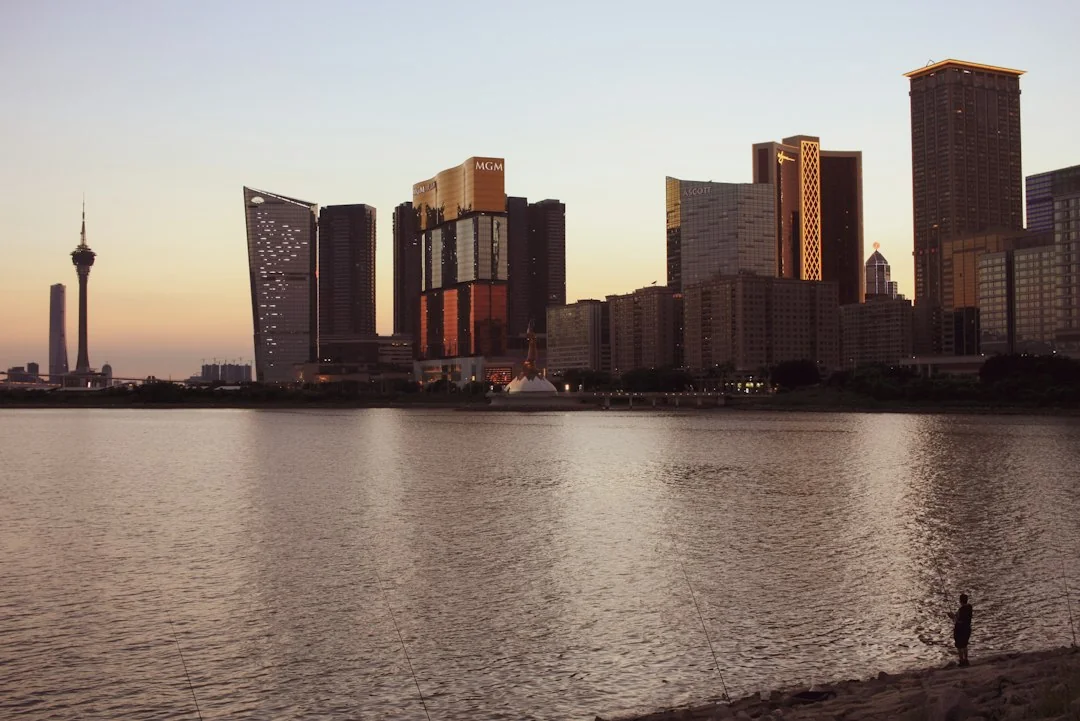
Macau’s casinos generated $24.5 billion in gaming revenue in 2023—nearly three times the Las Vegas Strip’s $8.8 billion. That gap isn’t a fluke. It’s the result of a perfect storm: 442 years of Portuguese colonial autonomy, a forty-year gambling monopoly that ended in 2002, strategic liberalization that invited Las Vegas giants to build mega-resorts, and unrestricted access to mainland China’s exploding middle class. Add a cultural obsession with baccarat, a VIP junket system that moved billions in chips through private rooms, and infrastructure connecting 127 million people within an hour’s drive, and you get the world’s undisputed gambling capital. This is the story of how a 11-square-mile peninsula became a $24 billion empire—and what it reveals about regulatory policy, cultural gaming preferences, and the mathematics of casino dominance.
The Portuguese Legacy: Asia’s First Legal Gambling Haven
When Portuguese traders first established a permanent settlement in Macau in 1557, they couldn’t have predicted that this 11-square-mile peninsula would eventually generate more gambling revenue than Las Vegas and Atlantic City combined. The arrangement was simple: China granted the Portuguese a trading post, and in return, they’d manage the territory. What made Macau special wasn’t just its location at the mouth of the Pearl River, but the legal autonomy that would eventually make it Asia’s gambling pioneer.
Colonial Gambling Roots
In 1847, Macau’s Portuguese colonial government took a step that would define the territory’s future: they legalized gambling. This made Macau one of Asia’s oldest legal gambling jurisdictions, predating Las Vegas’s casino boom by over a century. The decision was partly pragmatic—licensing gambling houses generated tax revenue for a colonial administration operating far from Lisbon. Early operations were rough around the edges: fan-tan parlors, lottery operations, and informal betting houses that catered to Chinese laborers and Portuguese merchants alike. There was no Bellagio-style glamour, just simple games of chance in back rooms and alleyways.
For decades, gambling remained largely unregulated beyond basic licensing. The real transformation wouldn’t begin until the 20th century, when the Portuguese government started granting monopoly concessions to organized syndicates. But the legal foundation was set: in a region where gambling was banned across most of Asia, Macau stood alone.
The 1999 Handover and Protected Status
After 442 years of Portuguese rule, Macau returned to Chinese sovereignty on December 20, 1999. The handover could have ended the gambling industry overnight—gambling remains illegal across mainland China, with severe penalties for operators and players alike. Instead, China preserved Macau’s gambling rights through the “one country, two systems” framework, the same arrangement applied to Hong Kong. Macau became a Special Administrative Region with its own legal system, currency, and crucially, the right to continue licensing casinos. This protected status gave international casino operators the confidence to invest billions, knowing their gaming licenses wouldn’t vanish with a policy shift in Beijing.
The Stanley Ho Era: Four Decades of Monopoly Power
Stanley Ho didn’t just run Macau’s casinos—he was Macau’s casinos. From 1962 to 2002, his company STDM (Sociedade de Turismo e Diversões de Macau) held the only legal casino license in the territory, a forty-year stranglehold that made him one of Asia’s wealthiest men and turned a sleepy Portuguese colony into a gambling destination.
The STDM Monopoly Structure
Ho won his first casino concession in 1962 after Portuguese authorities decided to formalize and tax Macau’s already-thriving underground gambling scene. The arrangement was simple: STDM paid the colonial government a fixed percentage of gaming revenue in exchange for zero competition. No rival operators. No market pressure to innovate. Just steady, predictable profits flowing from baccarat tables to government coffers to Ho’s expanding empire.
The monopoly structure created an unusual dynamic. While Las Vegas casinos competed fiercely on entertainment, amenities, and customer experience, Macau under Ho operated more like a utility company. Gamblers came because there was nowhere else in Asia to legally play. The casinos didn’t need to be spectacular—they just needed to exist. This stability established gambling as Macau’s economic backbone but also limited growth. By the late 1990s, Macau’s gaming revenue barely registered compared to Las Vegas, despite serving a region with billions of potential customers.
Lisboa Casino: Macau’s First Modern Gaming Palace
Ho’s signature achievement opened in 1970: the Lisboa Casino, a cylindrical tower that became Macau’s most recognizable landmark. Unlike the small, dingy gambling houses that preceded it, the Lisboa offered air conditioning, professional dealers, international cuisine, and hotel rooms—Macau’s first integrated resort before anyone called it that. The casino’s baccarat tables ran twenty-four hours, catering primarily to Hong Kong gamblers who arrived by ferry with suitcases of cash.
The Lisboa proved the concept that would later explode under liberalization: Asian high rollers would travel for premium gambling experiences. But under monopoly conditions, Ho had little incentive to build more. Why invest billions when you already owned the only game in town?
The 2002 Liberalization: Opening the Floodgates
Stanley Ho’s forty-year stranglehold on Macau’s casinos ended with a signature. In 2002, the Macau government issued three gaming concessions and three subconcessions, shattering the monopoly that had defined the territory since 1962. The decision transformed a sleepy collection of smoky gambling halls into a battleground for the world’s biggest casino operators.
The Six Concession Holders
The government’s strategy was deliberate: invite the Las Vegas giants and pair them with local expertise. Stanley Ho’s SJM retained its license but suddenly faced competition from five formidable rivals. Galaxy Entertainment secured a concession, leveraging Hong Kong capital and mainland connections. Wynn Resorts brought Steve Wynn’s theatrical vision. Las Vegas Sands arrived with Sheldon Adelson’s convention-and-retail philosophy. MGM partnered with Pansy Ho, Stanley’s daughter, in a move that blurred battle lines. Melco, backed by Australian billionaire James Packer and Lawrence Ho (another of Stanley’s children), rounded out the group.
These weren’t just new licenses—they were invitations to build. The operators erected mega-resorts that dwarfed anything Las Vegas had attempted. The Venetian Macao, which opened in 2007, claimed the title of world’s largest casino with 550,000 square feet of gaming space and more than 3,000 slot machines. Its gondolas and faux Italian canals became Instagram bait before Instagram existed.
The Individual Visit Scheme Game-Changer
The timing proved impeccable. In 2003, China launched the Individual Visit Scheme, allowing mainland citizens to visit Macau without joining group tours. Previously, visiting required bureaucratic hurdles that filtered out casual gamblers. The IVS demolished those barriers.
The numbers tell the story:
- 11.9 million visitors arrived in 2002, the year before IVS
- 39 million visitors flooded through by 2019
- The visitor explosion coincided with China’s economic boom, creating millions of middle-class gamblers with disposable income
The combination of world-class casino infrastructure and unrestricted mainland access created a perfect storm. Macau wasn’t just competing with Las Vegas anymore—it was operating in a different universe entirely.
Baccarat Dominance: Why One Game Rules Macau
No other casino game in history has achieved what baccarat has accomplished in Macau: a stranglehold generating 88-90% of all gaming revenue across the territory’s 43 casinos. This isn’t just market dominance. It’s a complete mathematical and cultural alignment that turns a centuries-old card game into the world’s most lucrative gambling product.
The Mathematics of Baccarat
The numbers explain part of baccarat’s appeal to high-stakes players. The banker bet carries a house edge of just 1.06%, while the player bet sits at 1.24%. These are among the lowest margins in any casino game, far better than American roulette’s 5.26% or Caribbean Stud’s 5.22%. For someone betting $2,000 per hand—common in Macau VIP rooms—that difference compounds rapidly across hundreds of hands per session.
But the real revenue engine isn’t the edge. It’s velocity. A baccarat table can deal 60 to 80 hands per hour with minimal player decisions. No strategy charts to consult, no split-or-double calculations to slow the action. Cards hit the felt, totals get compared, chips move. The cycle repeats. High betting limits in VIP rooms—often reaching $300,000 per hand—combined with this rapid turnover create volume that dwarfs slower games like poker or craps.
Cultural Preferences and Game Speed
Chinese gambling culture prizes fate over skill, and baccarat delivers pure chance with ceremonial flair. Players squeeze cards slowly to reveal pips, blow on them for luck, and track patterns on elaborate scorecards. The game requires no expertise that might expose a player to public failure—a critical consideration in face-conscious cultures. It’s simple enough to bet millions without looking foolish, yet ritualistic enough to feel meaningful. That combination, married to mathematics favoring the house by the slimmest sustainable margin, created Macau’s economic miracle.
VIP Junket Rooms: The High-Roller Engine
For two decades, Macau’s fortunes rose and fell on the strength of exclusive VIP rooms where baccarat chips moved in stacks the size of small houses. These private gaming salons, operated by junket agents rather than casinos directly, generated 60-70% of total gaming revenue before China’s government decided the party had gotten too lavish. The average bet in these rooms hovered around $2,000-$3,000 per hand—ten to thirty times the typical wager on the Las Vegas Strip—creating an ecosystem where a single player could swing a casino’s monthly numbers.
How the Junket System Worked
Junket operators functioned as high-roller concierge services with built-in credit lines. They recruited wealthy mainland Chinese gamblers, arranged private jets and luxury accommodations, and extended credit that bypassed China’s strict capital controls. The casinos leased VIP rooms to these operators, who collected commissions on player losses while absorbing the credit risk themselves. This structure solved two problems: casinos avoided the legal complications of lending to Chinese nationals, while high rollers gained access to gambling capital they couldn’t legally transfer across borders. The mathematics worked beautifully—for a while. Baccarat’s 1.06% house edge on banker bets meant that even with generous rebates to players (sometimes 1.25% of turnover), the volume in these rooms printed money.
The Anti-Corruption Impact
Beijing’s anti-corruption campaigns under Xi Jinping targeted the junket system as a vehicle for money laundering and capital flight. VIP gaming revenue collapsed from 66% of Macau’s total in 2013 to roughly 40% by 2023. Several prominent junket operators faced criminal charges, and in 2021, Macau essentially banned the traditional credit-based junket model entirely. The shift forced casinos to court mass-market tourists—families, younger gamblers, convention attendees—who bet smaller amounts but arrived legally and predictably. By 2023, mass-market revenue surpassed VIP for the first time in Macau’s casino history, marking the end of an era built on private rooms and astronomical table limits.
The Numbers: Macau vs. Las Vegas by the Data
Macau generated $24.5 billion in gaming revenue in 2023, dwarfing the Las Vegas Strip’s $8.8 billion by a factor of nearly three. That gap tells only part of the story. At its 2013 peak, Macau pulled in $45.2 billion—seven times what Las Vegas managed that same year. The city-state wasn’t just winning; it was operating in a different league entirely.
| Metric | Macau | Las Vegas Strip |
|---|---|---|
| Gaming Revenue (2023) | $24.5 billion | $8.8 billion |
| Peak Revenue (2013) | $45.2 billion | ~$6.4 billion |
| Number of Casinos | 43 | ~30 |
| Gaming Floor Space | 6.8 million sq ft | ~2.5 million sq ft |
| Revenue Multiple vs. Vegas | 2.78x | 1.00x |
But this dominance comes with extraordinary fragility. When COVID-19 closed borders in 2020, Macau’s revenue collapsed 79.3% to just $7.56 billion—proof that a business model built on cross-border Chinese gamblers can evaporate overnight. Las Vegas, with its diversified entertainment economy and domestic visitor base, suffered but never approached that depth of freefall.
The dependence runs deeper than visitor counts. Gaming taxes fund roughly 80% of Macau’s government budget, creating what economists call a “monoculture economy.” Forty-three casinos compete across 6.8 million square feet of gaming space on a peninsula smaller than Manhattan, all feeding the same revenue stream that keeps the lights on in government buildings. When baccarat tables go cold, everything from infrastructure projects to social services feels the chill.
Las Vegas diversified into conventions, residencies, and spectacle. Macau doubled down on baccarat. The math worked brilliantly for two decades. Then a pandemic reminded everyone what concentration risk actually means.
Infrastructure and Access: Building the Bridge to Riches
For decades, reaching Macau from Hong Kong meant a three-hour ferry ride or a circuitous land route through mainland China. High rollers didn’t mind chartering helicopters, but the average tourist faced a friction-filled journey that left billions in potential revenue stranded across the Pearl River Delta.
The Bridge That Changed Everything
The Hong Kong-Zhuhai-Macau Bridge demolished that barrier overnight. When the 34-mile engineering marvel opened in 2018, it collapsed the Hong Kong-Macau journey from three hours to thirty minutes. Suddenly, 80 million people in Hong Kong and Guangdong Province could reach Macau’s casinos faster than most Americans can drive to their nearest tribal casino. The bridge didn’t just connect roads—it fused Macau into the daily orbit of the world’s largest concentration of disposable income.
The timing proved both fortunate and ironic. Just as physical access reached its zenith, COVID-19 travel restrictions decimated visitor numbers, proving that infrastructure alone can’t guarantee success. But the bridge established permanent optionality: weekend gambling trips became as casual as crossing into New Jersey from Manhattan.
The 2022 License Renewal Terms
When Macau’s six casino operators renewed their licenses in 2022, the government imposed a radical shift. The new ten-year concessions mandated substantial investments in non-gaming attractions—theme parks, concert venues, Michelin-starred restaurants, luxury retail corridors. Operators must now prove they’re building destinations, not just gambling floors.
This pivot toward integrated resorts mirrors Las Vegas’s evolution but with Chinese characteristics. The message: attract families, business travelers, and tourists who happen to gamble, not just gamblers who happen to visit. The infrastructure now extends beyond roads and bridges into the architecture of entertainment itself.
What Macau’s Rise Teaches Us About Modern Gambling
Macau’s transformation from $2 billion gaming market in 2002 to peak dominance reveals five hard lessons that now shape casino strategy worldwide.
Breaking monopolies creates immediate wealth. Stanley Ho’s 40-year monopoly ended when Macau granted six new concessions. Within five years, gaming revenue jumped from $2.8 billion to $10.3 billion. Competition forced operators to build faster, train dealers better, and study player behavior with scientific precision. Las Vegas Sands, Wynn, and MGM imported American-style data analytics and loyalty programs that the monopoly never needed to develop.
Cultural preference beats game variety every time. Macau succeeded by ignoring slots and focusing obsessively on baccarat. While Las Vegas spreads investment across poker rooms, sports books, and thousands of slot machines, Macau’s casinos dedicate 90% of table space to one game. The lesson: deep expertise in what your customers actually play generates higher revenue per square foot than superficial variety.
High-roller dependency creates regulatory risk. When Beijing launched anti-corruption campaigns and tightened capital controls, VIP revenue collapsed from 66% of the market in 2013 to 40% by the early 2020s. Casinos built entirely around high-stakes players suddenly faced existential threats from policy changes thousands of miles away.
Geography matters more than marketing. Macau sits one hour by ferry from Hong Kong’s 7.5 million residents and connects by bridge to Guangdong’s 127 million people. No amount of advertising could replicate that access advantage.
Non-gaming revenue now determines survival. After revenue volatility proved VIP models unsustainable, operators pivoted to shopping malls, Michelin restaurants, and Cirque du Soleil shows. Modern concession renewals mandate that casinos generate substantial non-gaming income—a recognition that pure gambling empires are too fragile for government partnership.
The Future of the World’s Gambling Capital
Macau’s transformation from Portuguese colonial outpost to gambling empire wasn’t inevitable. It required the convergence of factors that can’t be replicated: strategic liberalization that ended a forty-year monopoly, cultural alignment around a single game with favorable mathematics, VIP junket innovation that moved billions across borders, protected legal status within China’s one-country-two-systems framework, and infrastructure connecting the world’s largest concentration of potential gamblers. The result generated more revenue than Las Vegas and Atlantic City combined.
But the model is evolving. The shift from VIP-dependent revenue to mass-market tourism, mandated diversification into non-gaming entertainment, and the collapse of the junket system signal a maturation. Macau is no longer just a place to bet millions on baccarat in private rooms. It’s becoming what Las Vegas became decades earlier: a destination where gambling anchors a broader entertainment economy.
What Macau’s story reveals extends beyond casino floors. It demonstrates how regulatory policy shapes markets, how cultural preferences create billion-dollar industries around single products, and how geographic access trumps marketing budgets. For anyone studying casino economics, gambling regulation, or the mathematics of risk, Macau offers a case study in what happens when all the variables align—and what happens when they don’t. The world’s gambling capital isn’t finished evolving. It’s just entering its next chapter.