
On May 15, 1905, a land auctioneer hawked scrubland lots beside Union Pacific’s railroad tracks while speculators wilted in 110-degree heat. By 2022, that desert maintenance stop had transformed into a $14.8 billion casino empire. The journey required three seismic shifts: Nevada’s desperate 1931 legalization gamble during the Depression, the mob’s brutal golden age that built the Strip’s foundation, and the corporate revolution that turned blood-soaked casinos into NASDAQ-traded entertainment giants. Behind the neon and quarterly earnings reports lie the real architects—Bugsy Siegel’s luxury vision cut short by assassination, Howard Hughes’s billion-dollar buying spree that pushed organized crime toward the exits, and Steve Wynn’s $630 million bet that redefined what a casino could be. This is how a railroad water stop became the world’s most sophisticated gambling economy.
1905-1931: Railroad Town to Gambling Frontier
The Railroad Auction That Started Everything
On May 15, 1905, a land auctioneer stood in 110-degree heat selling 110 acres of scrubland next to the Union Pacific Railroad tracks. The railroad needed a maintenance stop between Salt Lake City and Los Angeles. What they got was the foundation of America’s gambling capital.
The auction lasted two days. Speculators paid between $100 and $1,750 per lot, betting that this railroad junction would become something more than a water stop for steam engines. Early Las Vegas was a company town—the railroad owned the land, controlled the water, and employed most residents. Fremont Street became the main drag, lined with boarding houses, saloons, and supply stores catering to railroad workers. For two decades, Las Vegas remained exactly what it appeared to be: a dusty maintenance depot where trains refilled their boilers.
Why Nevada Bet on Gambling
Then came 1929. The stock market collapsed. Nevada’s mining economy cratered. State coffers went empty.
On March 19, 1931, Nevada Governor Fred Balzar signed Assembly Bill 98, legalizing wide-open gambling. The calculation was brutal and simple: tax revenue or bankruptcy. While every other state banned gambling, Nevada opened the door. The timing proved accidentally brilliant. That same year, construction began on Boulder Dam (later renamed Hoover Dam), 30 miles southeast of Las Vegas.
Between 1931 and 1936, more than 21,000 workers cycled through the dam project. They earned good wages—80 cents per hour when the national average was 50 cents—and faced genuine danger. Ninety-six men died building the dam. When those workers came to Las Vegas on their days off, they wanted whiskey, women, and action. The Northern Club and the Apache Hotel opened legal gambling halls on Fremont Street. Odds were crude—single-zero roulette gave the house a 2.7% edge, but most games ran closer to 5-15% house advantages because nobody was calculating optimal play.
Las Vegas had found its industry. The dam would finish. The workers would leave. But the precedent was set: Nevada would profit from vices other states outlawed.
The First Casinos: El Rancho Vegas and the Birth of the Strip
Ask most people which casino started the Las Vegas Strip, and they’ll confidently answer “The Flamingo.” They’re wrong by five years.
El Rancho Vegas opened on April 3, 1941, at the corner of Highway 91 (now Las Vegas Boulevard) and San Francisco Avenue, roughly where the Sahara once stood. Hotel owner Thomas Hull, who’d made his fortune with a chain of California motor lodges, spotted an opportunity that others had missed. By building just outside the Las Vegas city limits, he’d dodge the higher licensing fees and stricter regulations downtown operators faced. The four-mile distance from Fremont Street seemed like a gamble—locals called the empty highway stretch “the Strip” with sarcasm, not vision.
Hull’s 63-room resort established the template that every major Las Vegas casino still follows: integrated entertainment. The property combined 110 guest rooms (expanded shortly after opening), a casino with slots and table games, a showroom featuring headliners, multiple restaurants, and a swimming pool—all designed to keep guests on-site spending money. The Spanish-style ranch architecture, complete with windmill and covered wagon, might seem quaint now, but the business model was revolutionary. Previously, casinos were just gambling halls. Hull proved you could multiply revenue by capturing the entire customer experience.
The resort flourished during World War II, drawing military personnel from nearby bases and defense workers from the expanding wartime economy. When a fire destroyed El Rancho Vegas in 1960, the Strip had already transformed into the casino corridor Hull pioneered. The Flamingo may have brought mob glamour and national headlines in 1946, but Hull’s property wrote the actual playbook.
Bugsy Siegel and the Flamingo: The Murder That Built an Empire
Benjamin “Bugsy” Siegel gets credit for inventing the Las Vegas mega-resort, but the truth involves a Hollywood insider most people have never heard of. The Flamingo wasn’t Siegel’s vision from the ground up—it was a rescue operation gone catastrophically wrong.
The Wilkerson Connection Nobody Talks About
Billy Wilkerson owned the Sunset Strip’s hottest nightclubs, including Café Trocadero and Ciro’s, where movie stars spent their money. In 1945, he broke ground on a luxury hotel-casino four miles south of downtown Las Vegas, planning to call it the Flamingo after his girlfriend’s long legs. Wilkerson envisioned something Hollywood had never seen in Nevada: plush carpets, gourmet restaurants, a showroom for headliners, and a swimming pool shaped like a champagne glass.
Then construction costs spiraled. Wilkerson burned through $1 million, couldn’t secure more financing, and turned to the only people with that kind of cash: organized crime. Meyer Lansky and Bugsy Siegel didn’t just invest—they took over. By late 1946, Siegel controlled the project, Wilkerson owned just 13% of his own dream, and costs had ballooned past $6 million.
Why the Mob Killed Their Visionary
The Flamingo opened December 26, 1946, to disaster. Rain grounded planes carrying Hollywood celebrities. The casino lost $300,000 in the first two weeks because the hotel tower wasn’t finished—winners took their money back to Los Angeles instead of spending it on rooms and meals. Siegel shut down for renovations in January, reopened in March 1947, and finally started turning profits in May.
It didn’t matter. On June 20, 1947, someone fired nine shots through the window of Wilkerson’s former girlfriend’s Beverly Hills mansion, hitting Siegel four times. One bullet tore through his eye and exited the back of his skull. Within twenty minutes, mobsters walked into the Flamingo and announced new management.
The irony: Siegel’s corpse was barely cold when his vision proved correct. The Flamingo generated steady profits through 1947, clearing $4 million by year’s end and establishing the template every Strip casino would follow—luxury accommodations subsidizing gambling losses, creating an all-inclusive resort that kept money circulating inside one property.
The Mob Era: Skimming, Murder, and the Stardust Operation
Between 1950 and 1979, the Chicago Outfit, Kansas City mob, and other crime families controlled at least seven major Las Vegas casinos through hidden ownership structures and union pension fund loans. The Desert Inn answered to Cleveland. The Tropicana belonged to Kansas City. The Stardust, Fremont, and Hacienda served Chicago. These weren’t minority stakes—organized crime ran count rooms, hired executives, and extracted millions in untaxed cash that never appeared on Nevada Gaming Control Board reports.
The Stardust Casino became the most profitable skimming operation in Vegas history. From 1974 to 1983, Chicago Outfit operatives funneled an estimated $2 million annually from the casino cage before revenue could be recorded. Frank “Lefty” Rosenthal ran the operation from his position as entertainment director (Nevada wouldn’t license him for a formal casino role), while Anthony Spilotro enforced Chicago’s interests with a violence that eventually drew unwanted federal attention.
How Casino Skimming Actually Worked
Casino revenue moves through a documented chain: pit to cage to count room to vault. Gaming regulators audit these transfers to calculate taxable income. Skimming intercepted cash at the earliest possible point.
The Stardust method was elegant. Slot machine drop boxes were weighed before entering the count room. Skimmers removed $10,000 to $20,000 from selected boxes, replaced the cash weight with rolled coins or lead bars, then resealed the containers. The count room recorded the expected weight but found less actual cash. That discrepancy? Chalked up to “machine malfunction” or “accounting variance.” The stolen cash went into shopping bags carried out by trusted couriers who flew to Kansas City or Chicago, distributing shares to mob bosses who’d financed the casino with Teamsters pension loans.
The FBI’s Operation Strawman finally cracked the network in 1979 using wiretaps and cooperating witnesses. By 1986, fourteen mobsters faced federal charges. The conviction that followed effectively ended organized crime’s direct control of Nevada casinos.
1966-1969: Howard Hughes and the Corporate Takeover
On Thanksgiving Day 1966, a stretcher carrying the reclusive billionaire Howard Hughes slipped through the Desert Inn’s back entrance at 4 a.m. The eccentric aviation magnate had booked the entire top floor for ten days. He never left. When the casino’s management tried to evict him during the Christmas rush to make room for high rollers, Hughes did what billionaires do: he bought the place. The December 1966 purchase price—$13.2 million—marked the beginning of the most consequential ownership transformation in gambling history.
Hughes didn’t stop at the Desert Inn. Between 1967 and 1968, he acquired the Sands for $14.6 million, the Frontier, the Castaways, the Silver Slipper, and the Landmark. His buying spree totaled roughly $300 million and gave him control over one-quarter of the Strip’s gaming revenue. More importantly, it accomplished what federal investigators and Nevada regulators had failed to achieve: it pushed organized crime toward the exits. The mob couldn’t compete with a billionaire paying cash for entire casinos without asking questions about skimming operations or hidden points.
But Hughes’s shopping spree created an unexpected regulatory crisis. Nevada’s gaming laws required every individual with ownership interest to obtain a gaming license—a manageable process when casinos had a handful of partners, but impossible if publicly traded corporations wanted to enter the market. Hughes’s Summa Corporation sidestepped this because he was the sole owner, but the bigger opportunity remained locked.
The Regulatory Shift That Changed Everything
The Nevada Legislature solved this bottleneck with the Corporate Gaming Act of 1969. The new law allowed publicly traded companies to own casinos by licensing only key executives and major shareholders holding more than 5% of stock. Suddenly, Wall Street’s capital could flow into Las Vegas. Hilton Hotels purchased the International and the Flamingo in 1970. MGM opened its massive Grand in 1973 with $120 million in financing that no mob organization could have assembled. The era of professional management, quarterly earnings reports, and institutional investors had arrived—transforming gambling from a shadowy enterprise into a legitimate industry worth billions.
1989: Steve Wynn’s $630 Million Bet and the Mega-Resort Revolution
When The Mirage opened its doors on November 22, 1989, Steve Wynn wasn’t just building another casino—he was placing a $630 million wager that would either revolutionize Las Vegas or bankrupt him spectacularly. The price tag made it the most expensive hotel-casino ever constructed, dwarfing anything Vegas had seen. Industry veterans called him reckless. The property needed to generate $1 million daily in gaming revenue just to service debt and cover operating costs, a threshold no casino had sustained long-term.
Wynn proved the skeptics wrong within months. The Mirage wasn’t a casino with a hotel attached—it was an entertainment destination that happened to have gaming floors. A 54-foot erupting volcano drew crowds on the Strip every 15 minutes after dark. Siegfried & Roy’s white tigers became cultural icons. The property housed a 20,000-gallon aquarium behind the front desk, a tropical rainforest atrium, and brought Cirque du Soleil to American audiences for the first time. Guests came for the spectacle and stayed to gamble.
The Math Behind Wynn’s Gamble
The break-even calculation revealed Wynn’s razor-thin margins. With construction debt requiring roughly $365 million in annual revenue before profit, The Mirage needed sustained performance across all revenue streams:
- Gaming floors: targeting 3% daily hold on table games and 8-12% on slots
- Hotel occupancy: 3,044 rooms at premium rates ($89-$299 nightly in 1989 dollars)
- Food, beverage, and entertainment: converting non-gamblers into revenue sources
The strategy worked because Wynn understood visitor psychology—people would pay more to stay somewhere that felt like a destination. The property reached profitability within its first year, generating $404 million in gaming revenue alone by December 1990.
The Mirage triggered an unprecedented construction boom. Competitors scrambled to match Wynn’s vision: Luxor’s pyramid opened in 1993, MGM Grand became the world’s largest hotel the same year, and Wynn himself topped The Mirage with Bellagio in 1998. Vegas had transformed from a gambling town into an entertainment empire.
The Modern Empire: By the Numbers
Nevada’s gaming industry crossed $14.8 billion in revenue during 2022, shattering previous records and marking the complete transformation from Bugsy Siegel’s blood-soaked Flamingo to Wall Street-scrutinized quarterly earnings reports. The Las Vegas Strip alone pulled in $8.2 billion—representing 55% of the entire market—a concentration of gambling capital unmatched anywhere on Earth.
The scale defies the desert railroad stop that existed a century ago:
- 42 million visitors descended on Las Vegas during 2019’s pre-pandemic peak, each one a data point tracked by loyalty programs and surveillance systems
- 150,000 hotel rooms spread across the valley, more than most American cities contain in total housing units
- Zero mob skimming replaced by Securities and Exchange Commission filings, where every nickel flows through publicly audited ledgers
MGM Resorts International, Caesars Entertainment, and Wynn Resorts trade on NASDAQ, their quarterly reports dissecting hold percentages and EBITDA margins for institutional investors. The same Strip properties that once served as money-laundering fronts now answer to shareholders, compliance officers, and state gaming regulators who examine every cent.
This corporate transformation hasn’t diminished profitability—it amplified it. Modern revenue management systems adjust slot machine payback percentages by the hour based on player traffic. Table game algorithms optimize dealer schedules to maximize hold. The casinos that Benny Binion and Meyer Lansky built on gut instinct now operate on predictive analytics and machine learning models that would make Renaissance Technologies jealous.
The mathematical house edge remains unchanged, but the efficiency of extracting it has become ruthlessly precise.
Legacy and Lessons: What Vegas Teaches About Casino Economics
The Strip’s evolution from mob-run casinos to publicly traded corporations revealed a counterintuitive truth: gambling became more profitable when it stopped being the main attraction. MGM Resorts, Caesars Entertainment, and Wynn Resorts operate as entertainment conglomerates where slot machines and table games subsidize everything else. The math is simple. A casino with a 2.7% house edge on roulette needs volume, not just odds. Fifty gamblers betting $100 each generates $135 in theoretical revenue per hour. Scale that to 2,000 slot machines running 18 hours daily, and suddenly you’re funding Cirque du Soleil productions, celebrity chef restaurants, and nightclubs that themselves generate millions.
Corporate ownership after Howard Hughes’s 1966 buying spree brought something the mob never could: access to Wall Street capital and regulatory transparency. When Steve Wynn took Mirage Resorts public in 1989, he proved casinos could raise hundreds of millions for expansion through stock offerings rather than suitcases of cash from questionable sources. This legitimacy allowed the construction of billion-dollar properties like Bellagio ($1.6 billion in 1998) and The Venetian ($1.5 billion in 1999) that redefined what a casino resort could be.
The house edge hasn’t changed—blackjack still hovers around 0.5% with basic strategy, slots typically run 5-10%—but modern casinos win through operational scale and customer data. They’ve mastered the psychology of “loss disguised as wins” on slot machines and comp programs that track every dollar wagered.
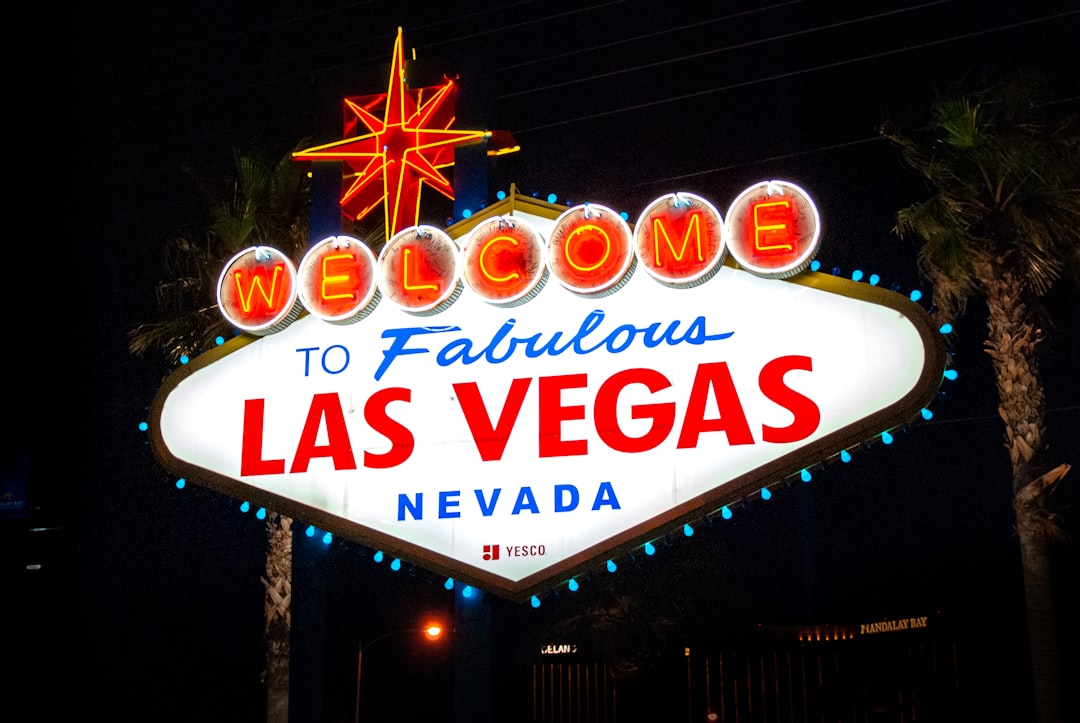
Betty Willis’s iconic “Welcome to Fabulous Las Vegas” sign, erected in 1959 and deliberately left uncopyrighted, captures this perfectly. Vegas embraced its gambling identity so completely that it became a public brand anyone could use, market, and celebrate. That openness became the blueprint for Macau, Singapore, and every integrated resort worldwide.
From Railroad Stop to $14.8 Billion: The Three Transformations
Las Vegas’s transformation required three distinct revolutions, each building on the foundation the previous era established. Nevada’s Depression-era legalization gamble in 1931 created the legal framework, but it took organized crime’s brutal efficiency to prove the business model worked. Bugsy Siegel died for his vision, but the Flamingo’s luxury template survived him. The mob’s skimming operations extracted millions, yet their hidden ownership structures inadvertently prepared the ground for corporate takeover. Howard Hughes’s $300 million buying spree pushed crime families toward the exits while the 1969 Corporate Gaming Act opened the floodgates to Wall Street capital. Steve Wynn’s $630 million Mirage bet completed the transformation, proving that billion-dollar entertainment destinations could generate returns that made the old mob operations look like penny-ante poker games.
The modern Strip’s $14.8 billion empire exists because a 1905 railroad land auction created the geography, the 1931 legalization created the opportunity, the mob created the infrastructure, and corporations created the scale. Sometimes the biggest bets pay off over decades, not days—and sometimes a dusty maintenance depot becomes the world’s most sophisticated gambling economy because every era of risk-takers refused to fold.