
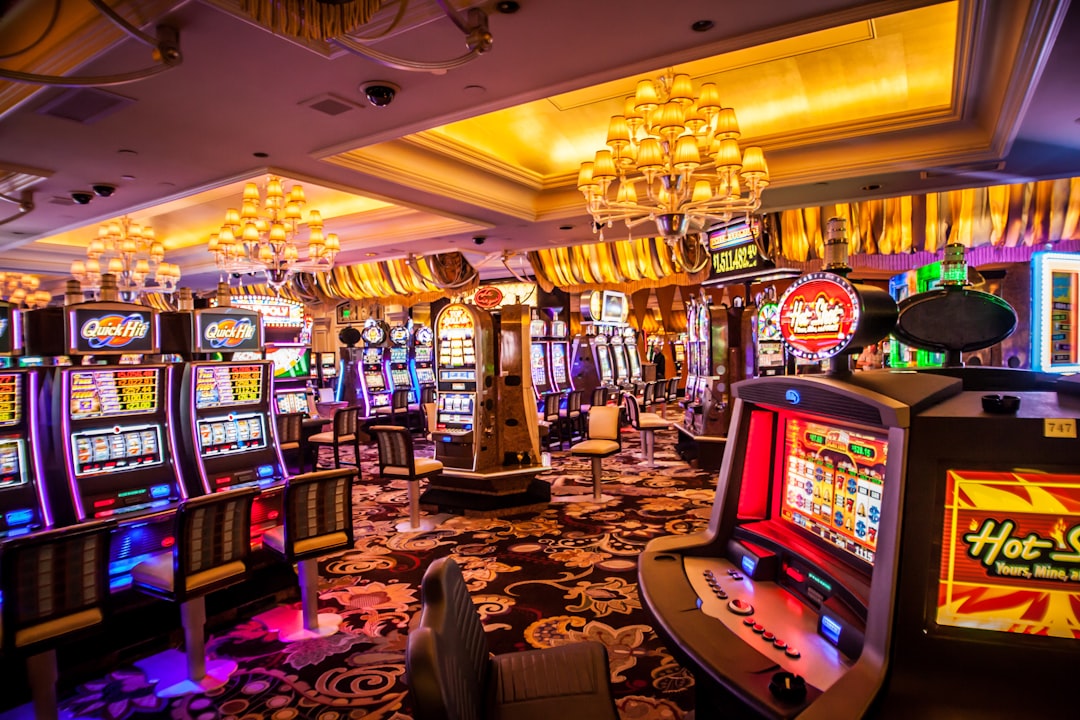
You’re watching the slot machine reels spin. Cherry. Cherry. The third reel slows… and stops one symbol past another cherry. Your heart races—you almost won. That feeling isn’t bad luck. It’s engineered psychology, a calculated feature designed to hijack your brain’s reward system. This “near-miss effect” represents one of the most powerful psychological mechanisms in gambling addiction, and in 2013, the DSM-5 reclassified gambling disorder as a true addiction, placing it alongside substance abuse. This article unpacks the neuroscience behind near-misses, the cognitive biases they exploit, the deliberate design choices manufacturers employ, and why some brains are more vulnerable than others. You’ll see the mathematics, the brain scans, and the casino engineering tactics that turn entertainment into compulsion.
What Happens in Your Brain During a Near-Miss
When those slot machine reels land cherry-cherry-lemon, your brain doesn’t register a loss. It registers almost winning. And that small distinction creates a neurological feedback loop powerful enough to keep millions of players glued to machines worldwide.
The Ventral Striatum: Your Brain’s Reward Center
Luke Clark, a neuroscientist at the University of Cambridge, used fMRI scanners to peer inside gamblers’ brains during slot machine sessions in 2009. What he discovered challenged conventional thinking about winning and losing. The ventral striatum—a cluster of neurons buried deep in the brain’s core that processes rewards and pleasure—lit up during near-miss outcomes almost identically to actual wins. When players hit two sevens and missed the third by one symbol, their reward circuitry activated as if they’d won money.
This wasn’t just correlation. The activation patterns were statistically indistinguishable from genuine wins in recreational gamblers. Your brain, evolutionarily wired to recognize “almost” as valuable feedback for improvement, treats near-misses as information worth pursuing. In survival contexts, nearly catching prey meant your hunting strategy was working. In casinos, nearly hitting jackpot means absolutely nothing for future outcomes, but your ventral striatum doesn’t know that.
Why Dopamine Makes Losing Feel Like Winning
The neurochemical culprit is dopamine, the brain’s motivation molecule. Contrary to popular belief, dopamine doesn’t create pleasure—it creates wanting. When you experience a near-miss, dopamine floods the striatum just as it does during wins, creating that familiar rush of anticipation and motivation to play again.
Experimental studies measuring dopamine release show near-misses trigger 60-80% of the neurochemical response that actual wins produce. Problem gamblers show even stronger reactions—their brains release more dopamine during near-misses than recreational players, creating a biological vulnerability that manufacturers exploit ruthlessly. This neurochemical reinforcement explains why near-miss outcomes increase gambling persistence by 30-40% in laboratory settings, turning rational people into repeat customers who can’t quite shake the feeling that they’re getting closer to winning.
How Slot Machines Are Engineered to Create Near-Misses
Walk into any casino and watch a slot player for five minutes. You’ll see something peculiar: they’ll lose most spins, yet celebrate dozens of times. The machine will blast triumphant music, flash cascading lights, and display animated coin explosions—all for returning 40 cents on a dollar bet. This isn’t accidental design. It’s warfare waged on your dopamine system, and the ammunition is manufactured with surgical precision.
Modern slot machines use weighted reel strips and virtual reel technology that deliberately produce near-miss outcomes on 30-45% of losing spins, according to gaming industry patents and regulatory filings. In a truly random three-reel game with equal symbol distribution, matching two cherries while missing the third would occur roughly 10-15% of the time. Instead, manufacturers program the reels to stop just above or below jackpot symbols at triple that frequency. The Nevada Gaming Control Board allows this practice as long as the displayed symbols correspond to actual probabilities—but those probabilities are anything but natural.
The sensory manipulation extends far beyond visual tricks. IGT’s research division spent years mapping which audio frequencies trigger the strongest reward responses. High-pitched chimes at 4,000-6,000 Hz create perceived urgency. Low bass tones at 100-200 Hz produce physical excitement. When you hit two bonus symbols and miss the third, the machine doesn’t play a loss sound. It plays the first two-thirds of a win sound, leaving your auditory cortex hanging mid-reward. Studies show this increases betting speed by 30-40% compared to silent losses.
Most insidious are “losses disguised as wins”—spins where you win less than you wagered but the machine erupts in celebration anyway. Bet five dollars, win two dollars, and watch fireworks. Your rational mind knows you just lost three dollars. Your ventral striatum, flooded with dopamine from the celebration, logs it as a victory. Aristocrat Technologies pioneered this technique in the late 1990s, and now 90% of multi-line video slots employ it. The result? Players consistently underestimate their losses by 20-35% in post-session surveys.
The Cognitive Biases That Keep You Playing
Your brain wasn’t designed for the statistical realities of modern casinos. Evolution wired us for pattern recognition in a world where streaks actually meant something—where a dry riverbed suggested drought, or successful hunts in one valley meant better odds there tomorrow. Casinos exploit these ancient mental shortcuts with surgical precision.
The Gambler’s Fallacy: Why ‘Due for a Win’ Is a Myth
At the roulette table in Monte Carlo’s Casino de Monte-Carlo on August 18, 1913, black came up 26 times in a row. Bettors lost millions frantically doubling down on red, convinced each spin made red more “due.” They were victims of the gambler’s fallacy—the stubborn belief that independent events somehow balance out in the short term.
Every roulette spin has the same 47.37% chance of hitting red (on a European wheel). The wheel has no memory. Yet watch any craps table when a shooter goes cold, and you’ll hear players muttering about being “due” for a seven. This cognitive distortion keeps slot players glued to machines that haven’t paid in hours, convinced the jackpot is imminent simply because it hasn’t hit recently.
The mathematics are ruthless: if you flip a fair coin and get five heads, the next flip still has exactly 50/50 odds. Past results don’t accumulate cosmic debt.
The Illusion of Control in Casino Games
Craps players develop elaborate throwing techniques. They set the dice just so, grip them precisely, and release with practiced motion. Some casinos even allow “controlled shooting” because they know the truth: it doesn’t matter. The house edge remains 1.41% on the pass line regardless of your throwing ritual.
This illusion of control peaks in games requiring physical interaction:
- Craps shooters believe their throwing technique influences random tumbles
- Slot players time their button presses, convinced rhythm affects RNG outcomes
- Roulette bettors track wheels obsessively, seeking patterns in pure randomness
- Video poker players hold cards based on “gut feelings” despite fixed probability tables
The availability heuristic compounds these biases. You vividly remember your friend’s $5,000 slot jackpot but forget the hundreds of losing sessions. Casinos amplify this with bells, lights, and public celebrations of wins while losses happen in silent obscurity. Your brain overestimates winning probabilities based on memorable exceptions, not mathematical reality.
Why Problem Gamblers Respond Differently to Near-Misses
When neuroscientists at the University of Cambridge scanned the brains of problem gamblers watching slot machine outcomes in 2009, they discovered something alarming: near-misses lit up reward circuits with 30-40% more intensity than in recreational players. The two cherries followed by a blank space—a clear loss by any objective measure—triggered neural responses that resembled actual wins.
This heightened sensitivity appears hardwired in problem gamblers. fMRI studies consistently show that their ventral striatum, the brain’s reward prediction center, overreacts to almost-wins. While a recreational gambler might register disappointment at two matching symbols out of three, a problem gambler’s brain floods with dopamine as if the near-miss validated their strategy. The neurological message is clear: you were close, keep going.
The persistence effect is measurable in controlled experiments. Researchers have documented that near-miss outcomes extend gambling sessions by 30-40% compared to unambiguous losses. For problem gamblers, this extension is even more pronounced. They interpret near-misses as “learning experiences” or proof that a payout is imminent, rather than what they actually are—mathematically identical to any other loss.
This neurological vulnerability suggests problem gambling isn’t simply poor decision-making or weak willpower. The brain’s reward circuitry processes information differently, transforming losses into motivation. When Luke Clark’s research team at Cambridge compared neural activation patterns, problem gamblers showed dopamine responses to near-misses that recreational players reserved only for actual wins.
The implications are sobering: slot manufacturers and casino designers have spent decades perfecting near-miss frequencies—typically programmed to occur 30-40% more often than probability alone would dictate—effectively targeting the exact neural vulnerability that separates casual entertainment from compulsive behavior.
Variable Ratio Reinforcement: The Strongest Addiction Mechanism
In the 1950s, behavioral psychologist B.F. Skinner discovered something casino operators would later exploit with surgical precision: rewards delivered on unpredictable schedules create the most persistent, extinction-resistant behaviors known to science. His experiments with pigeons pecking levers for food revealed a fundamental truth about the mammalian brain—we’re wired to chase uncertain rewards far more obsessively than guaranteed ones.
What B.F. Skinner’s Pigeons Taught Us About Slot Machines
Skinner tested four reinforcement schedules in his laboratory. Pigeons receiving food after every tenth peck (fixed ratio) or every ten seconds (fixed interval) learned quickly but stopped pecking almost immediately when rewards ceased. The birds on variable schedules—unpredictable rewards averaging every tenth peck or ten seconds—behaved entirely differently. They pecked compulsively, continuing long after rewards stopped flowing.
Modern slot machines operate on this exact variable ratio schedule. You might win on your third spin, then your eighteenth, then your seventh. The average payout frequency might be programmed at 1-in-12 spins for smaller wins, but you never know which spin delivers. This unpredictability triggers dopamine release not just during wins, but in anticipation of potential wins—creating a neurochemical loop that fixed-schedule rewards simply cannot match.
Compare this to your paycheck. You receive it every two weeks (fixed interval), and while you appreciate the money, you don’t develop an obsessive relationship with checking your bank account. The predictability eliminates the dopamine-driven anticipation. Casino games eliminate predictability by design. A blackjack player might win three hands consecutively, then lose eight straight—the randomness keeps dopamine pathways firing in overdrive.
This variable ratio reinforcement explains why gambling addiction develops faster and resists treatment more stubbornly than many substance dependencies. You’re not just fighting a chemical—you’re battling your brain’s most primitive learning mechanism, one that evolution designed to keep our ancestors searching for unpredictable food sources. Casinos simply redirected that survival instinct toward their profit margins.
Loss-Chasing and the Sunk Cost Trap
The moment a gambler decides to “win it back” marks one of the most dangerous psychological transitions in the casino. This behavior—known as loss-chasing—operates on a simple but devastating principle: money already lost feels like an investment that demands recovery rather than an expense that’s already gone. Psychologists call this the sunk cost fallacy, and casinos have profited from it for centuries.
Loss-chasing isn’t just poor judgment; it’s the primary clinical indicator separating recreational gamblers from those with gambling disorder. When researchers at the University of Cambridge tracked gambling sessions in 2018, they found that problem gamblers increased their average bet size by 37% after consecutive losses, while recreational players typically reduced theirs or stopped playing. The difference? Problem gamblers view losses as debts their next bet can erase.
The mathematical reality destroys this logic. A slot machine with a 92% RTP doesn’t suddenly owe you money because you’ve lost ten spins in a row. Each pull remains an independent event with an 8% house edge. But the human brain doesn’t process it this way. After losing $500, a gambler experiences that sum as recoverable rather than gone. “Getting even” becomes an achievable goal rather than what it actually is: a 50/50 proposition that requires risking more money at negative expected value.
This explains why gambling sessions extend far beyond rational stopping points. The $500 down becomes $1,200, then $2,400. Each escalation feels justified because the alternative—accepting the loss and walking away—triggers the acute psychological pain of admitting defeat. Casinos understand this dynamic intimately, which is why they offer free drinks, eliminate clocks, and create environments where losing track of both time and cumulative losses becomes effortless.
The Real Numbers: Prevalence and Comorbidity
Between 2 and 3% of American adults meet the clinical criteria for gambling disorder—roughly 6 to 9 million people. That’s more than the population of New York City caught in a neurological trap that masquerades as entertainment. Another 4 to 6% experience subclinical problems: they haven’t hit rock bottom yet, but the warning signs flash like a slot machine on tilt.
These percentages might seem small until you consider what they’re extracting from. The global gambling market reached $449 billion in 2022, a figure that dwarfs the GDP of many nations. Every dollar flowing through that ecosystem represents someone making a decision, and for millions, those decisions carry profound psychological weight.
The comorbidity data reveals gambling disorder rarely travels alone:
- Depression: Problem gamblers show 3 to 4 times higher rates than the general population. The causality runs both directions—some gamble to escape depressive episodes, others spiral into depression after catastrophic losses.
- Anxiety disorders: The same 3 to 4-fold increase appears here, with generalized anxiety and panic disorder particularly prevalent among those chasing losses.
- Substance use disorders: Alcohol and drug dependency co-occur at rates triple or quadruple the baseline, creating a toxic reinforcement loop where chemical and behavioral addictions feed each other.
These aren’t coincidental overlaps. They represent shared neurological vulnerabilities—dysregulated reward systems, impaired impulse control, and compromised decision-making circuits. When researchers at Cambridge University scanned problem gamblers’ brains in 2012, they found dopamine receptor abnormalities nearly identical to those in cocaine addicts. The casino became the dealer, and near-misses became the drug delivery system.
Recognizing the Signs and Breaking the Cycle
Understanding how near-misses manipulate your dopamine system doesn’t grant immunity. A neuroscientist who studies slot machine algorithms can still develop a gambling problem—the brain’s reward pathways don’t care about your credentials.
Red Flags of Problem Gambling
The transition from recreational gambling to disorder follows predictable patterns. Watch for these warning signs:
- Chasing losses: Returning to the casino or sportsbook specifically to recoup money lost in previous sessions, often with larger bets than you can afford
- Financial deception: Lying to family members about gambling activities or the amount of money lost
- Borrowing or stealing: Taking out loans, maxing credit cards, or using money earmarked for rent, utilities, or other necessities
- Preoccupation: Constantly thinking about gambling, replaying past sessions, or planning the next opportunity to gamble
- Failed quit attempts: Repeatedly trying to cut back or stop but finding yourself unable to maintain control
Problem gamblers show 30-40% longer persistence after near-miss outcomes compared to recreational players—a neurological vulnerability that compounds over time. The same brain regions that light up during actual wins activate during those “almost” moments, creating a feedback loop that rational understanding alone can’t break.
Where to Get Help
If you recognize these patterns in yourself or someone you know, specific resources exist:
- National Problem Gambling Helpline: 1-800-522-4700 (free, confidential, 24/7)
- Gamblers Anonymous: Free peer support meetings in all 50 states and online
- SMART Recovery: Science-based alternative to 12-step programs with gambling-specific meetings
- State-specific self-exclusion programs: Legal bans that prohibit casinos from allowing you entry
Treatment combines cognitive behavioral therapy with financial counseling. The goal isn’t just stopping the behavior—it’s rewiring the thought patterns that near-miss effects have exploited.
The House Always Wins—But You Don’t Have to Play
Near-misses aren’t accidents of probability. They’re calculated features, engineered with decades of psychological research and refined through millions of hours of player data. The slot machine that shows two jackpot symbols and stops the third reel one position away isn’t malfunctioning—it’s performing exactly as designed. Your ventral striatum lighting up, your dopamine flooding, your conviction that the next spin will hit: all predicted outcomes of deliberate design choices that manufacturers patent and regulators permit.
Understanding these mechanisms doesn’t make you immune, but it does offer something casinos would prefer you didn’t have: informed perspective. Gambling can be entertainment when approached with strict limits, clear budgets, and the recognition that every bet carries a negative expected value. The house edge isn’t a suggestion—it’s mathematical certainty compounding over time.
The line between entertainment and compulsion isn’t always obvious until you’ve crossed it. If you recognize the warning signs—chasing losses, lying about gambling, feeling unable to stop—that recognition itself is valuable. Problem gambling is a neurological condition, not a moral failure, and treatment works. The same brain plasticity that let near-misses rewire your reward system can be redirected toward healthier patterns.
The most powerful decision you can make in a casino is knowing when to walk away. The second most powerful is recognizing when you can’t, and asking for help.