
Las Vegas casinos won $14.8 billion in 2022. That same year, thousands of players walked away winners on any given night. Both statements are true, and that paradox is no accident. It’s the house edge—an invisible mathematical force that guarantees casino profitability while allowing individual victories. This isn’t about luck, superstition, or whether the dealer likes you. It’s pure probability, engineered into every game on the floor. We’ll decode the math in plain language, reveal which games offer the best and worst odds, and expose the psychological traps that keep you betting longer than you should. Fair warning: understanding how casinos actually work won’t help you beat them, but it will transform gambling from mysterious chance into transparent mathematics.
What Is House Edge? The Casino’s Built-In Profit Margin
Every time you place a $100 bet on American roulette, you’re statistically handing the casino $5.26. Not today, not necessarily this session, but averaged across thousands of spins, that’s the mathematical reality. This built-in profit margin is the house edge, expressed as the percentage of each wager that casinos expect to retain over time.
Think of house edge as the casino’s commission on the action. A 5% house edge doesn’t mean you’ll lose exactly $5 for every $100 you bet tonight. It means that across millions of bets placed by thousands of players, the casino will keep roughly 5% of all money wagered. The law of large numbers transforms this mathematical expectation into near-certainty for the house. While you might walk away up $500 after an hour at the craps table, the casino knows that someone else lost $600, and by the end of the month, the percentages have done their work.
How House Edge Works in Practice
The mechanics are simpler than most people realize. Take European roulette with its 2.70% house edge. The wheel has 37 pockets (numbers 1-36 plus a single zero), but a winning single-number bet pays 35 to 1 instead of the true odds of 36 to 1. That one-unit gap is the house edge. On a $10 bet, you should win $360 based on true probability, but the casino pays you $350. Over hundreds of spins, those $10 differences accumulate into substantial revenue.
Different games operate on wildly different margins. Blackjack played with perfect basic strategy carries a mere 0.5% edge, making it one of the tightest games on the floor. Most players, however, make strategy mistakes that push the edge closer to 2-3%. Slot machines range from 2% on high-limit machines to 15% on penny slots. Keno, that casino staple beloved by coffee-drinking seniors, can hit 40% house edge—a mathematical bloodbath dressed up in numbered ping-pong balls.
Why It Doesn’t Guarantee Every Player Loses
Here’s the paradox that keeps people gambling: house edge guarantees casino profitability, not individual player losses. Someone walks out of the Bellagio every night having beaten the house. Variance—the statistical term for short-term fluctuation—creates winners and losers in ways that seem to defy the math. A player might hit three blackjacks in a row, defying the 4.8% probability. Another might parlay a hot craps streak into $20,000 from a $200 buy-in.
The casino doesn’t care. They’re not gambling; you are. With 2,000 slot machines running 18 hours daily and blackjack tables churning through 70 hands per hour, those millions of bets arrive quickly. MGM Resorts reported $5.7 billion in casino revenue in 2022, not because every guest lost, but because the mathematical edge ground through enough volume to make individual winning sessions statistically irrelevant. The house edge isn’t a guarantee that you’ll lose tonight. It’s a guarantee that the casino will profit this quarter.
The Law of Large Numbers: Why Time Is Always on the Casino’s Side
Walk into any casino and you’ll see someone hitting a jackpot, doubling down successfully on blackjack, or riding a hot streak at the craps table. These wins are real, and they’re precisely what keeps players coming back. But here’s what the casino knows that most gamblers don’t: individual luck is noise, and volume is destiny.
The law of large numbers—first formalized by mathematician Jakob Bernoulli in 1713—states that as the number of trials increases, the actual results converge toward the expected probability. For casinos, this transforms a modest mathematical edge into an ATM that prints money with statistical certainty. A single spin of American roulette might land on your number despite the 5.26% house edge. But across 10 million spins, that edge becomes as reliable as gravity.
Consider the Bellagio’s roulette tables. If players collectively wager $100 million on American roulette over a year, the casino expects to keep approximately $5.26 million—not as a hope or projection, but as a mathematical near-certainty. The variance works both ways: individual sessions swing wildly, with some players walking away winners. These visible victories create the illusion of beatable odds. Meanwhile, the aggregate data tells a different story.
Nevada’s casinos demonstrated this principle spectacularly in 2022, winning $14.8 billion from gamblers. That wasn’t luck. That was 5.26% on roulette, 2-3% on blackjack, and 2-15% on slots, multiplied by billions of bets. The house edge appears tiny on any single wager—small enough to seem conquerable. But casinos don’t care about single wagers. They care about the millions of hands, spins, and pulls that transform probability into profit.
Short-term variance creates winners and funds gambling dreams. Long-term mathematics pays for casino expansions, shareholder dividends, and those free drinks. Time isn’t just on the casino’s side—it is the casino’s edge.
House Edge by Game: Where Casinos Make Their Money
Not all casino games are created equal. A blackjack player using basic strategy faces a 0.5% house edge, while someone feeding coins into a keno machine is battling a 25-40% disadvantage. That’s the difference between losing $5 per $1,000 wagered versus $250-$400.
| Game | House Edge | Notes |
|---|---|---|
| Blackjack | 0.5% (perfect play) / 2-3% (average player) | Lowest edge in the casino with proper strategy |
| Craps (Pass/Don’t Pass) | 1.41% / 1.36% | Best bets on the table; proposition bets hit 16%+ |
| Baccarat (Banker) | 1.06% | Popular with high rollers for good reason |
| European Roulette | 2.70% | Single zero wheel |
| American Roulette | 5.26% | Double zero nearly doubles the house advantage |
| Slots | 2-15% | Penny slots often worst; higher denominations better |
| Caribbean Stud Poker | 5.22% | Entertaining but expensive |
| Keno | 25-40% | Casino’s biggest moneymaker per dollar wagered |
Table Games: Your Best Mathematical Bet
Blackjack earned its reputation as the thinking gambler’s game for a reason. When Ed Thorp published Beat the Dealer in 1962, casinos panicked because the math was real: perfect basic strategy drops the house edge to half a percent. Problem is, most players don’t use perfect strategy. They hit when they should stand, split when they shouldn’t, and ignore the dealer’s upcard. That pushes the actual house edge to 2-3% for the typical casino floor.
Craps looks chaotic, but the pass line bet carries just a 1.41% house edge. The don’t pass is even better at 1.36%. Baccarat, despite its velvet ropes and high-roller mystique at casinos like the Bellagio, offers a 1.06% edge on banker bets. These games give players legitimate chances at short-term wins.
Slots and Keno: The Casino’s Cash Cows
Walk into any Nevada casino and you’ll find 70% of the floor space devoted to slot machines. They generate roughly 65% of casino revenue despite offering some of the worst odds in the house. A typical slot carries a 5-10% house edge, but penny slots—marketed as budget-friendly entertainment—often exceed 12-15%.
Keno represents the casino’s most brutal mathematical proposition. With house edges routinely hitting 25-40%, it’s essentially a voluntary tax on players who don’t understand probability. Yet keno lounges stay busy, particularly in Las Vegas locals casinos, because the dream of turning $1 into $50,000 overrides the mathematics.
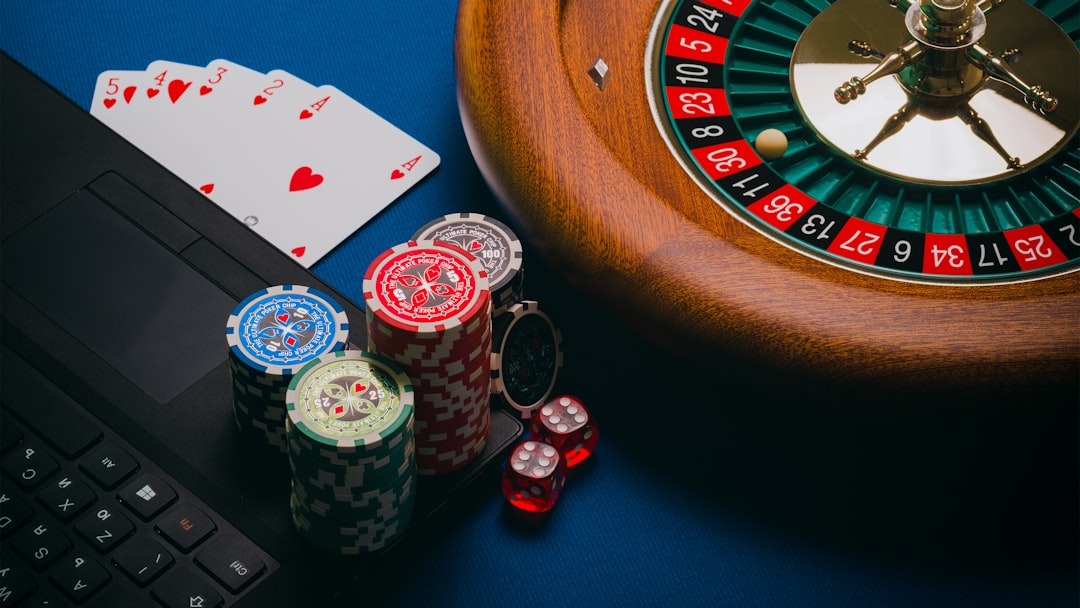
The Roulette Wheel: A Perfect Example of House Edge in Action
A single green pocket on a spinning wheel generates billions in casino profits. That’s the elegant simplicity of roulette’s built-in advantage.
When you bet on a single number in European roulette, you’re facing 37 possible outcomes: numbers 1 through 36, plus that lone green zero. If you win, the casino pays 35-to-1. Sounds fair until you do the math. True odds should be 36-to-1, since there are 36 ways to lose and only one way to win. That missing chip on each winning bet—the gap between 36-to-1 and 35-to-1—is where the house edge lives. Over 37 spins, you’d statistically win once and lose 36 times. You’d collect 35 chips on your winner but have wagered 37 total. The casino keeps 2 chips out of every 37 bet, creating a 2.70% house edge.
American roulette doubles down on this advantage by adding a second green pocket: the double zero. Now there are 38 possible outcomes, but the payout remains 35-to-1. The math shifts dramatically. Two chips lost per 38 wagered equals a 5.26% house edge—nearly twice the European version. That extra green slice doesn’t seem like much when the wheel is spinning, but it compounds relentlessly. A player betting $100 per spin can expect to lose an additional $2.56 per spin at an American wheel compared to a European one.
The Bellagio, the Venetian, and virtually every major casino in Las Vegas stock their floors with American wheels for exactly this reason. The green zeros aren’t decorative. They’re the casino’s salary, calculated to the decimal point and disguised as just another part of the game.
How Slot Machines Hide the Highest House Edges
Walk into any Las Vegas casino and you’ll see retirees feeding $20 bills into penny slots, convinced they’re playing the cheapest game on the floor. They’re actually facing some of the worst odds in the building. While a blackjack table might carry a 0.5% house edge with proper play, those colorful penny machines often extract 10-15% of every dollar wagered—sometimes higher.
The Penny Slot Paradox
The counterintuitive mathematics of slot pricing creates a perfect trap. A penny slot sounds economical, but modern machines require minimum bets across multiple paylines. That “penny” game often demands 50 cents to $2.50 per spin when you activate all lines. Meanwhile, higher-denomination machines—dollar or five-dollar slots—typically offer better return-to-player (RTP) percentages. A $5 slot might return 95% to players over time, while penny slots might return just 88-90%. Casinos exploit the perception of affordability while quietly increasing their mathematical advantage.
This pricing structure explains why slot machines generate roughly 65% of Las Vegas casino revenue despite occupying less floor space than table games. The volume is staggering: a single slot player might make 600 spins per hour, compared to perhaps 60 hands of blackjack. Even with smaller individual bets, the house edge compounds rapidly.
Why RNGs Make Slot Strategy Impossible
Random Number Generators (RNGs) eliminate any possibility of timing or pattern recognition. These microprocessors cycle through thousands of number combinations every second—even when the machine sits idle. The moment you press the button, the RNG stops on whatever number sequence it reached in that millisecond. The spinning reels are pure theater, a visual representation of an outcome already determined by the chip. Unlike poker or blackjack, where skill influences results, slots offer no decision points. You’re simply buying a predetermined probability with every spin.
Card Counting and Beating the House: When Math Works Against the Casino
In April 1979, a team of MIT students walked into Caesars Palace with $89,000 and left with $400,000 in a single weekend. They didn’t cheat. They simply counted cards, turning blackjack’s 0.5% house edge into a 1-2% player advantage through pure mathematics. The casino’s response revealed everything about how seriously they take their mathematical edge: lifetime bans, shared blacklist databases, and eventually, continuous shuffle machines designed to make counting impossible.
Card counting works because blackjack is the rare casino game where past events influence future odds. When the deck is rich in tens and aces, players have a statistical advantage—they’re more likely to hit natural blackjacks (paid at 3:2) and dealers are more likely to bust on stiff hands. By tracking the ratio of high to low cards remaining, skilled counters know exactly when to increase their bets. Edward Thorp’s 1962 book Beat the Dealer proved mathematically that this system worked, and casinos have been fighting it ever since.
The irony is perfect: card counting is completely legal, but casinos will escort you out the moment they suspect you’re doing it. Why? Because it demonstrates that the house edge isn’t just marketing spin—it’s a measurable, protectable asset. When the MIT team and countless others proved you could flip that edge through skill alone, casinos responded with surveillance systems, dealer training programs, and eight-deck shoes specifically designed to dilute the counter’s advantage. They’ll let you play any hunch, chase any superstition, or use any “system” you want. Just don’t use the one that actually works.
The Psychology That Amplifies the Math: Why Players Keep Betting
The house edge would be a minor inconvenience if players approached gambling with perfect rationality. They don’t. The same cognitive shortcuts that help humans make quick decisions in everyday life become exploitable vulnerabilities on the casino floor, transforming a 2.70% mathematical disadvantage into a multi-billion-dollar industry.
The gambler’s fallacy stands as the most profitable cognitive error in casino history. After watching red hit five times consecutively on a roulette wheel, players pour money onto black, convinced the wheel is “due” for a correction. The math says otherwise: each spin carries identical 47.37% odds for red or black on a European wheel, regardless of what happened previously. Monte Carlo’s casino witnessed this delusion spectacularly in 1913 when black hit 26 times in a row. Players lost millions betting against the streak, certain that red’s appearance was imminent. The ball didn’t care about their certainty.
Near-misses weaponize false hope. Slot machines displaying two jackpot symbols with the third just above or below the payline trigger the same neural reward pathways as actual wins, despite paying nothing. Research from the University of Waterloo found that near-misses activate brain regions associated with winning, not losing, compelling players to continue feeding machines. This isn’t accidental—modern slots are programmed to deliver near-misses at rates exceeding random chance.
Casino design completes the psychological trap. The Bellagio generates $1.2 billion annually partly because its floor plan eliminates right angles, making exits invisible while keeping slot machines and tables in constant view. No clocks, no windows, and oxygen-enriched air maintain energy levels. Even the carpet’s deliberately busy patterns discourage looking down, keeping eyes on games. When mathematics meets environmental psychology, the 5.26% house edge on American roulette becomes almost irrelevant—players stay longer than logic would ever permit.
What Players Should Know: Making Smarter Gambling Decisions
The casino will win your money eventually. That’s not pessimism—it’s probability. But how quickly they win it depends entirely on the choices you make at the tables. A player betting American roulette at 5.26% house edge will hemorrhage their bankroll twice as fast as someone playing European roulette at 2.70%. Over a four-hour session with $100 bets, that difference equals roughly $336 in expected losses versus $162.
Smart gambling isn’t about beating the house. It’s about buying the most entertainment per dollar lost.
Choose your games by the numbers:
- European roulette over American — That single zero saves you 2.56% on every spin
- Banker bet in baccarat — 1.06% house edge beats nearly everything on the floor
- Pass line in craps — 1.41% edge with free odds bets that carry zero house advantage
- Blackjack with basic strategy — Learn the chart, get it down to 0.5%
- Avoid keno and slots — House edges routinely exceed 10%, with penny slots often the worst offenders despite their cheap appearance
No betting system can overcome mathematical disadvantage. The Martingale won’t save you. Neither will card counting at a six-deck shoe with a 50% penetration rate. The MIT Blackjack Team succeeded because they found specific vulnerable conditions that no longer exist in modern casinos. You won’t.
Set your loss limit before you sit down, and base it purely on entertainment value. If $200 buys you three hours of enjoyment at the craps table, that’s $66 per hour for your night out. Compare that honestly to dinner, a concert, or any other leisure spending. The moment you start calculating profit potential, you’ve already lost the only game that matters—the one against your own expectations.
The Math Never Loses
The global gambling market hit $231 billion in 2022, and that number will climb. Not because casinos cheat, manipulate outcomes, or prey on the desperate—though problem gambling remains a serious issue. They win because the mathematics are airtight. House edge plus the law of large numbers equals guaranteed profitability, regardless of individual winning sessions or hot streaks that make the evening news.
Understanding house edge transforms gambling from mysterious luck into transparent probability. That 5.26% on American roulette isn’t hidden in fine print. It’s engineered into the wheel, visible in that double-zero pocket, and working every single spin. The casino doesn’t hope you’ll lose. They know that across millions of bets, the percentages will do exactly what Bernoulli predicted in 1713.
This isn’t a condemnation of gambling—it’s a reality check. If you walk into the Bellagio with $500 and view it as the cost of an evening’s entertainment, you’re gambling intelligently. If you walk in expecting to pay rent with roulette winnings, you’re fighting mathematics with hope. One of those strategies acknowledges reality. The other funds casino expansions.
The house always wins not through deception, but through mathematics that’s been hiding in plain sight. Gamble for entertainment, never profit. The odds are literally against you, calculated to the decimal point and proven across billions of bets. At least now you know exactly why.